
Our Crafts tour has gained popularity because of the curation and attention to detail by our team headed by P. Sowbhaya.
To our delight we had two CCT members who joined us K. Meena and Nandini Raju on a 10 day tour starting 15th to 22nd November. As mentioned during our seminar by Shri Arjun Narne, Kutch has developed into a crafts hub where tourism, crafts, culture, lifestyle and its economy has found a way to sustain itself. A great case study and a model to be adapted to each craft region.
Day one:
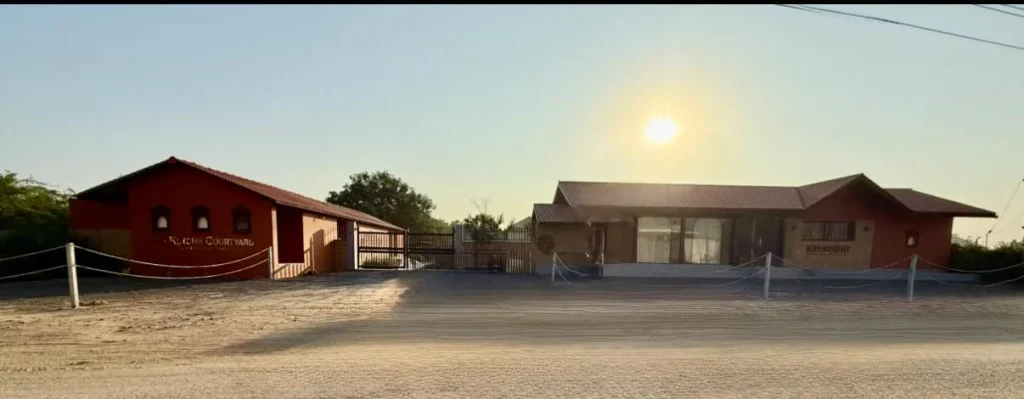
Arrival at Bhuj airport from Hyderabad to the homestay known as The Kutch Courtyard, a Kerala style decor in Kutch, blended with Rogan artwork on the wall and a collection of artefacts from all over India were tastefully displayed which added to the mouthwatering overload of culinary delight of our choice and the hospitality unforgettable by Smita, owner and Mihir, her manager. It felt like home for the four nights that we spent here. Across the courtyard stands Smita’s store, The Charkha, offering a thoughtfully curated collection of handmade products. She gave us our first introduction to Kutch embroidery and the heirloom cotton traditions of Gujarat.
16th November.
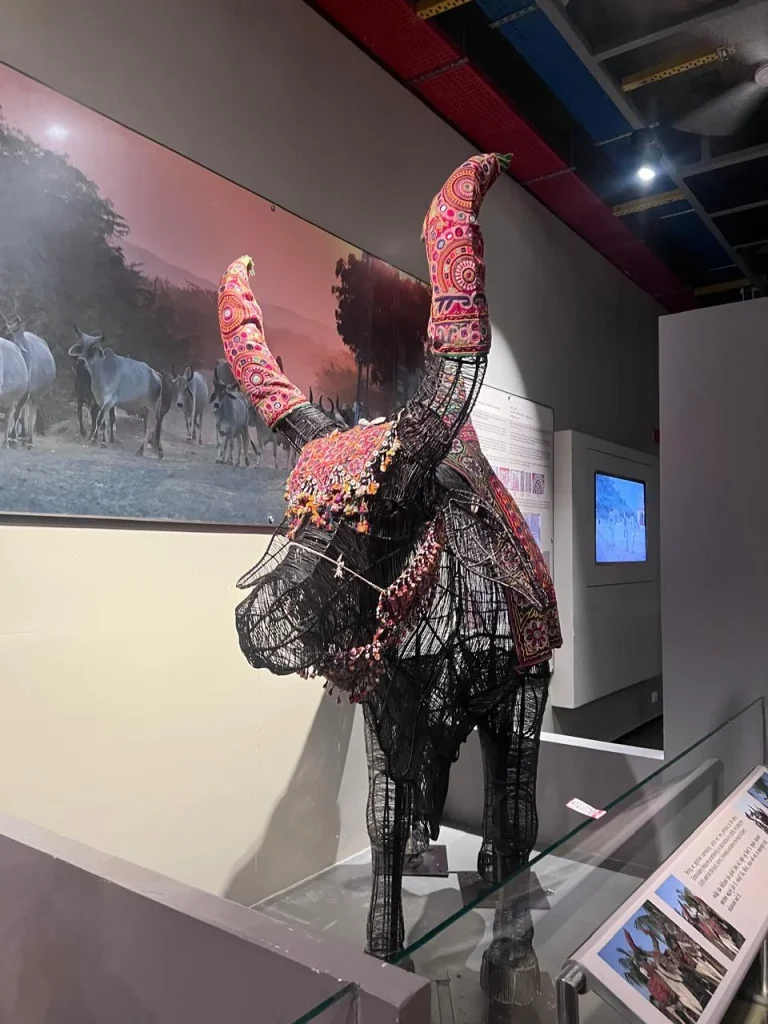
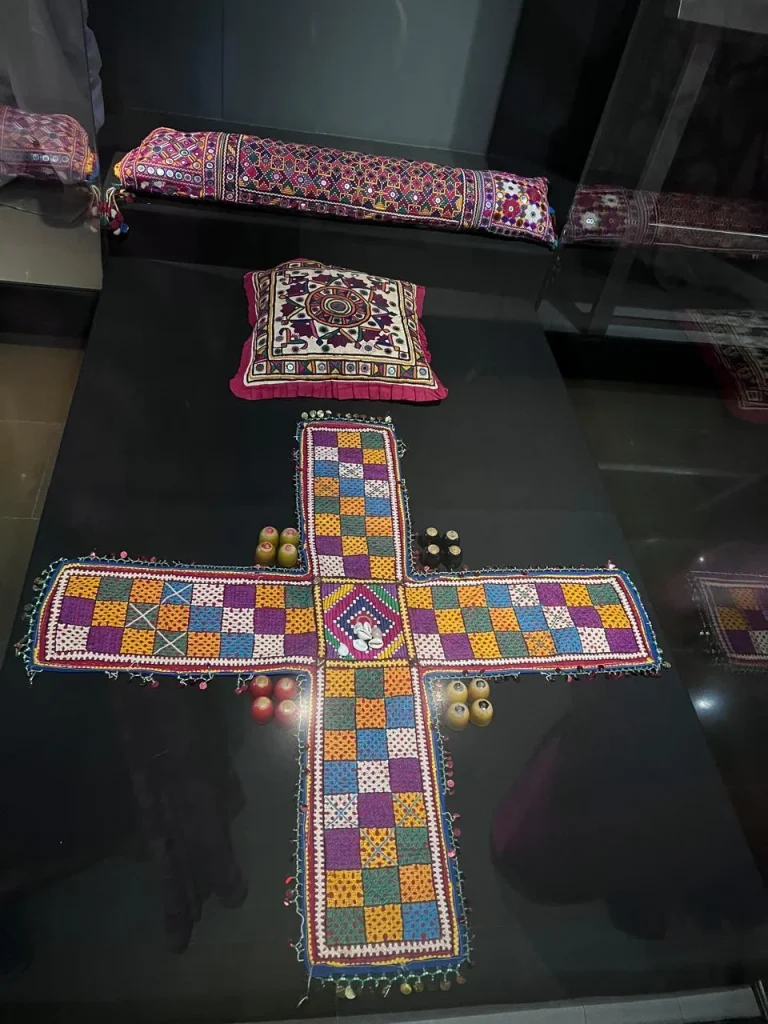
Visit to LLDC – Living and learning design Centre museum dedicated to preserve and promote local crafts like textiles, embroidery, pottery, metal works etc.
Jalpa, a resource person at Shrujan, gave us a guided tour after screening a short film about the organisation. She belongs to one of the embroidery communities. Shrujan’s architecture and the vibrant collection in its museum are must-see attractions in Bhuj. The campus includes a studio where visitors can try block printing or embroidery, and enjoy a well-stocked shop. We also enjoyed lunch at the Shrujan Cafe.
Next on the same day was a visit to Ismail Khatri in Ajrakpur to see block printing works at his studio. To quote Dr. Ismail Khatri in his words “I had a lot of fun learning the English language. I never went to school. When a UK University had awarded me with a doctorate degree, I accepted it without knowing what it was for.” With such humbleness, this was conveyed. He did learn English so that he could communicate and share his knowledge.
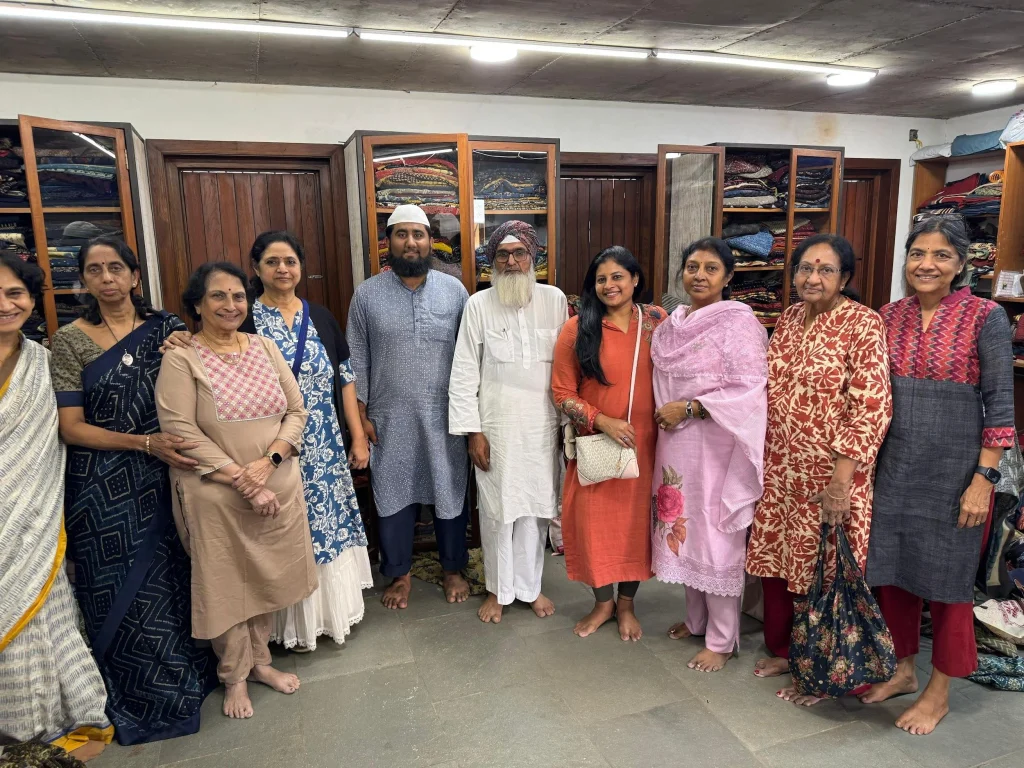
Bhandini is our last stop for the day, a workshop with Zakia and Adil, a young and very enthusiastic couple. Zakia focuses on the tie dye while Adil works with natural dyes who works hard to get the colour right. He says the colour is very temperamental in nature and when he gets it right, he believes it is a eureka moment like everything coming together! Unlike Shrujan which is a nonprofit organisation, this is privately managed within a compact space that is well planned that can accommodate guests or tourists. Though located in the narrow lanes it is worth the visit.
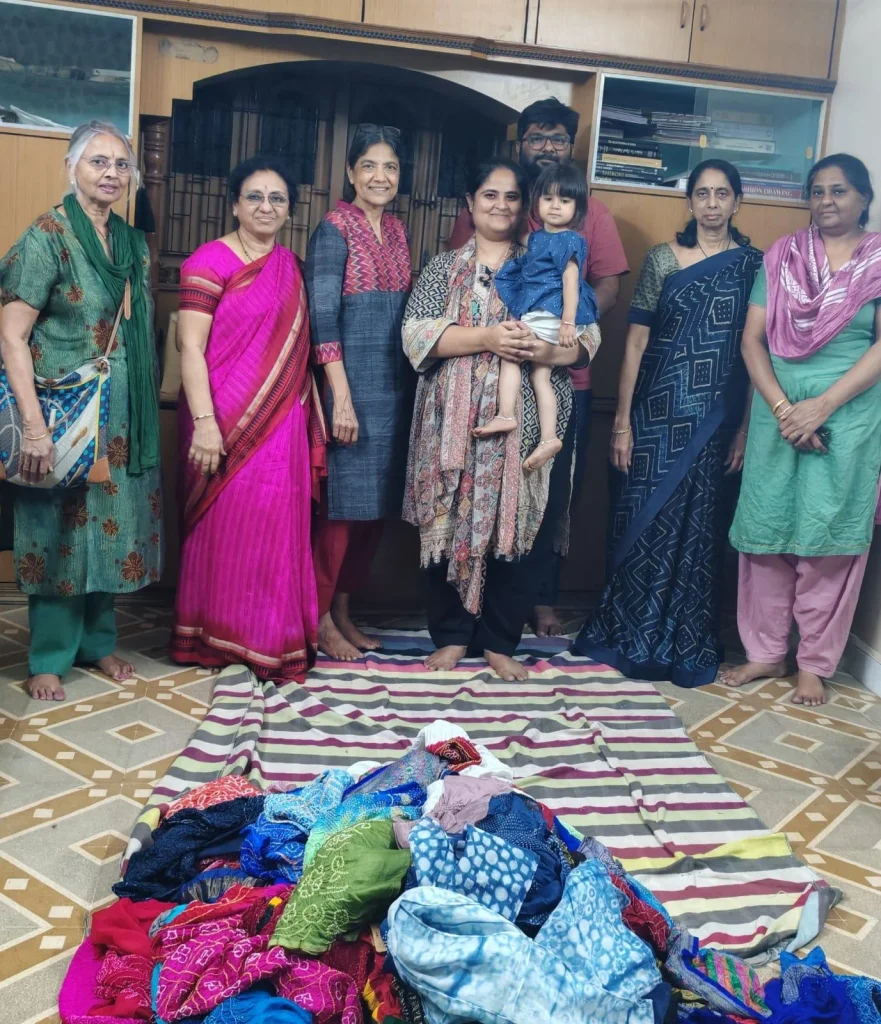
17th November was a visit to Kala Raksha, a trust committed to documenting the existing traditions and maintain a collection of heirloom textiles which have been collected over a period. We have heard so much about a lady who came from the USA to design and outsource Indian weaves and crafts, who eventually stayed back and made Bhuj her home. Prakash Bhanani began the initiative in 1990, and Judy Frater joined four years later. Judy Frater is well known for her contributions to the craft sector.
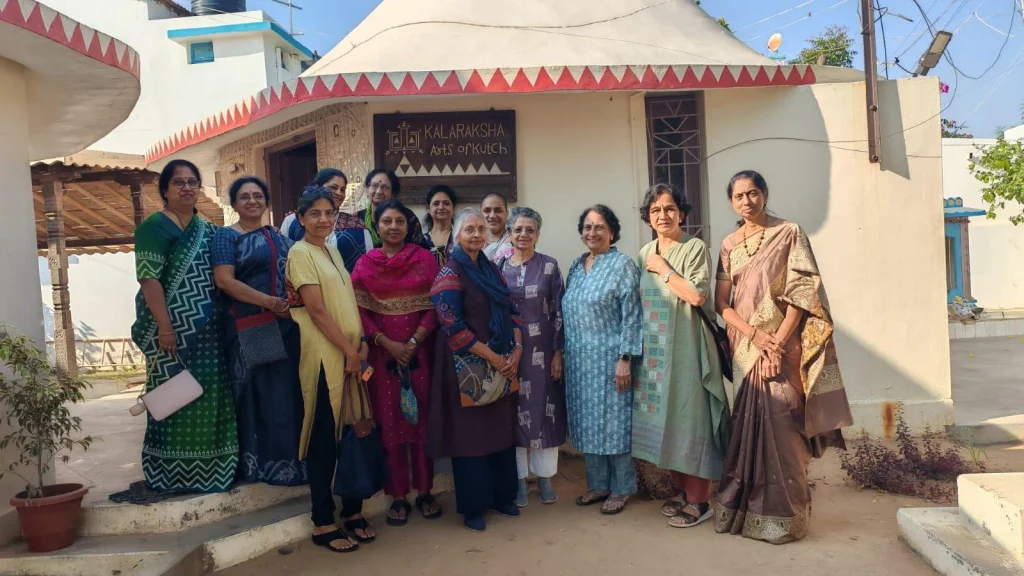
Kalaraksha works with women from 25 villages. Their walls feature informative displays of various embroidery techniques and traditions used. The colours in their intricate work are bold, yet balanced. No colour overtakes another, said the Project Director. They house several different styles of embroidery which different communities practice with their unique styles, so distinct, that is worthy of a mention. To name a few Pakko, a solid tight chain buttonhole stitch with mirror and bead work. Such a delicate counting thread embroidery forming triangle patterns that is worked on the reverse side which is a must see. We were given a demo of this fine work. Khaarek, a geometric style with fine tightly packed stitches that fill the fabric. This is mostly done by the Meghwaad Maaru community. Rabari community work with heavy mirror and bead work with bold and distinct motifs, Ahir is known for the bright colours of birds, animals and flowers. The Jat community does multiple styles of embroidery that reflects its nomadic history. Mutava, another fine geometric pattern that has fine minute details. Aari is a hooked needle to create chain stitches practiced by the Mochi community. The communities like Rabari, Ahir, Mutwa, Medhwal, Sidhartha Rajput, Jat and Halepotra practice distinct styles of embroidery like Suf, Pakko, Aari etc. Their beautifully curated campus reflects the architectural style of Gujarat, with mud-and-mirror work – Lippan work as it is known adorning the exterior walls. Their archives hold beautiful old pieces that are worth seeing.
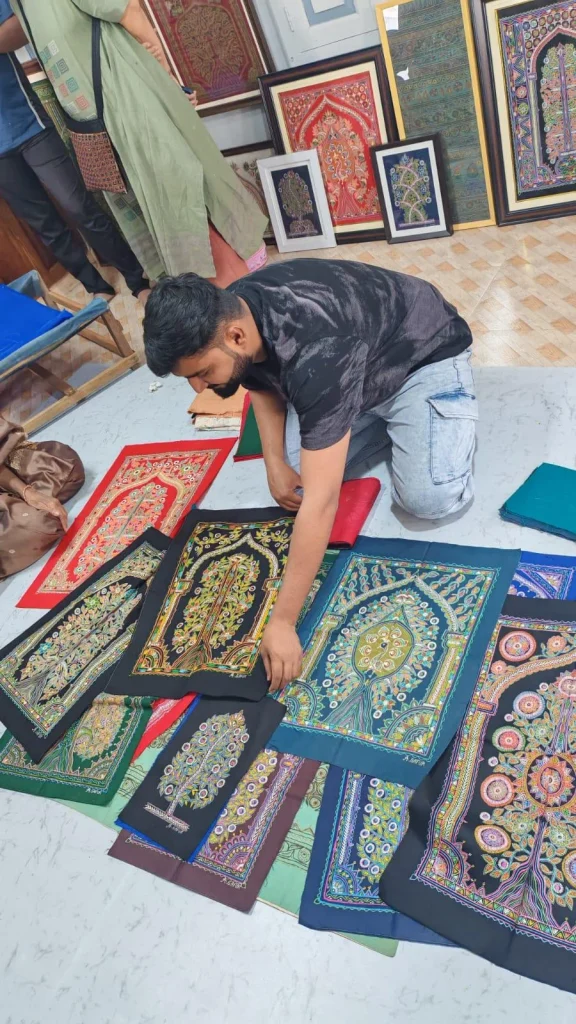
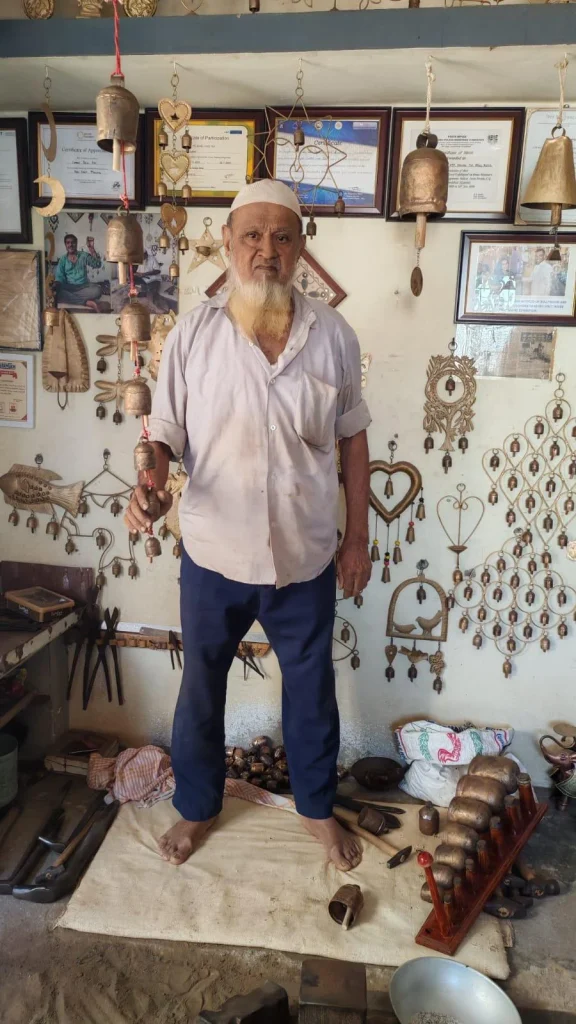
Moving on to Nirona, we visited the only family that consists of uncle and nephews that still practice Rogan artwork. Seeing is believing as far as this craft is concerned. It seems to be an embossed art form, but what they do after the outline is done brings the magic to the art which looks like delicate lace work. We were witness to a demo of the craft and had hands-on experience too. Then we move onto copper bell making which has a huge market of its own. An elderly artisan sits with the anvil that is designed for making bells and beats away the copper sheet to create a bell just before our eyes. And the groove at the rim of the bell which is done in different ways will create a distinct sound for the camels, cows, sheep and so on. We were treated to a Gujarati meal in a school arranged by Abdulgafur Khatri of copper bells.
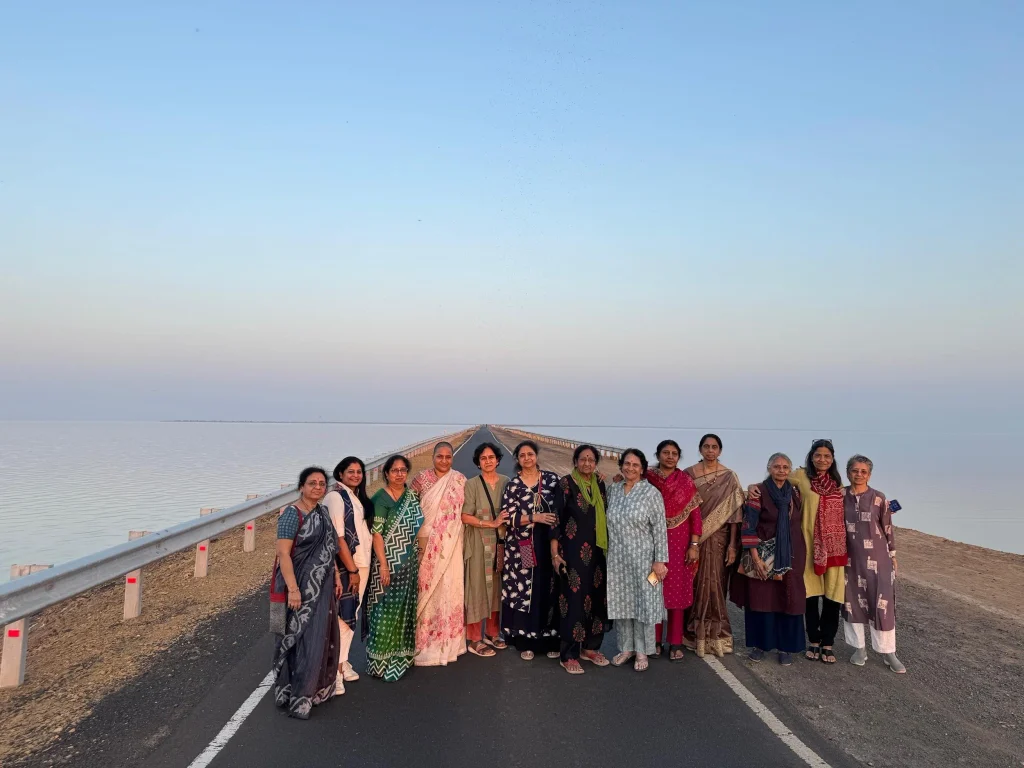
Next was the Rann of Kutch ride towards Dolavira ‘Road to Heaven’ to watch the sunset. How magnificent it must be when there is salt everywhere for miles. We witnessed miles of salt water with the setting sun and a few insects for company. We did get to eat Mava at Birandiyara, a delicacy which is made of buffalo milk. Remember it is a cow state with very few buffaloes unlike Andhra.
Our last visit that day was to a pottery studio in Khavda village. It was late, we had to knock on their door as it was past 7pm. The men were away but the women showed us around and explained how it is all made. There is a difference in the clay they use which gives it the texture. They were beautifully painted bowls, water jugs, and so much more.
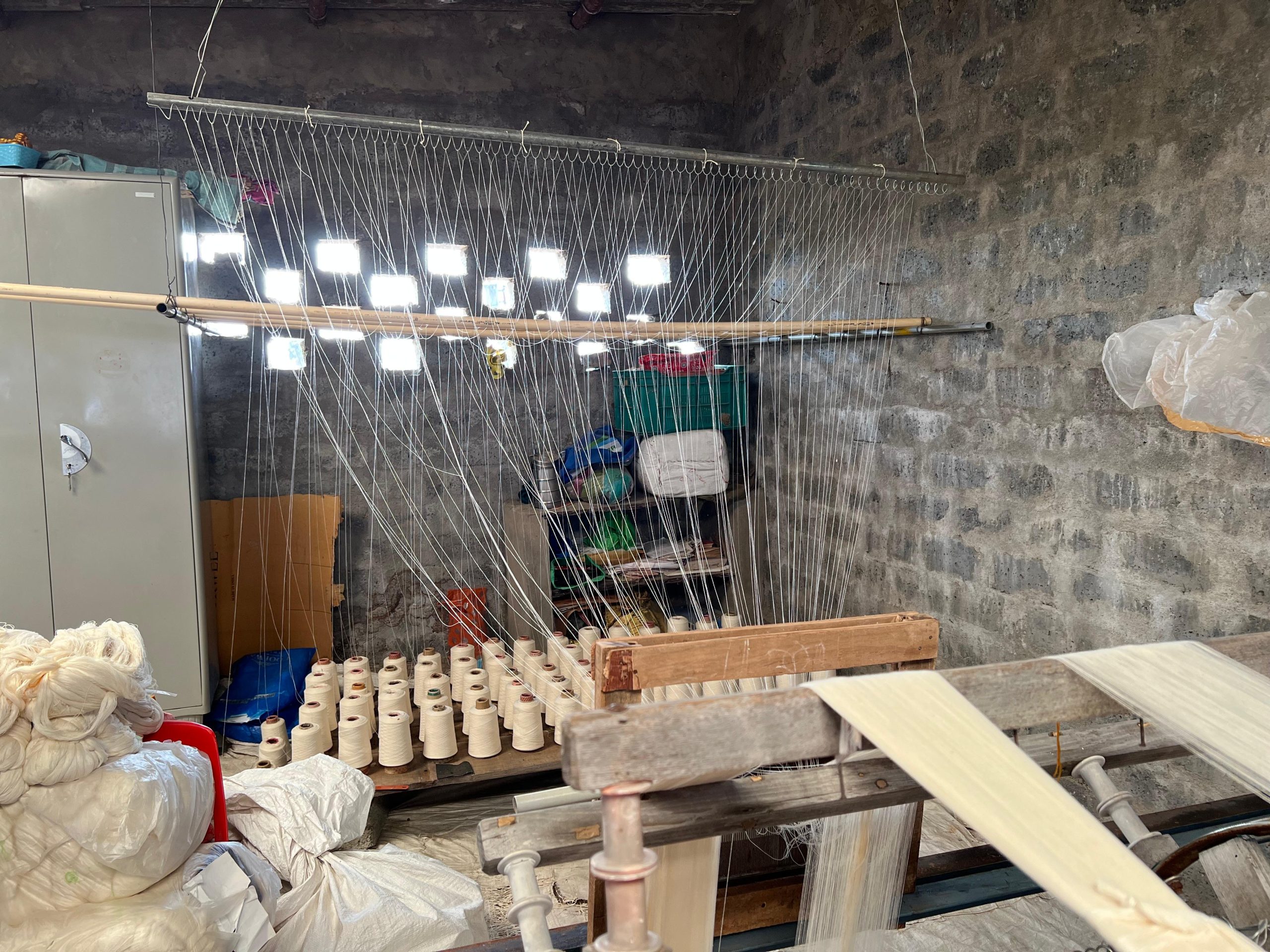
On 18th visit to Vankar Vishram Valji in Bhujodi. The late Vankar Vishram Valji is a passionate weaver whose legacy is now continued by his sons, Arjun, Siju and Shyamji. What their father achieved in weaving and block printing, the sons have elevated even further. Nothing prepares you for the scale and organisation of their workspace, be it weaving areas, spinning units, natural dyeing storage, demonstration spaces, a shop, and even a cowshed. Neat internal pathways connect the various buildings, including Arjun’s home. They have turned their fathers name into a brand.
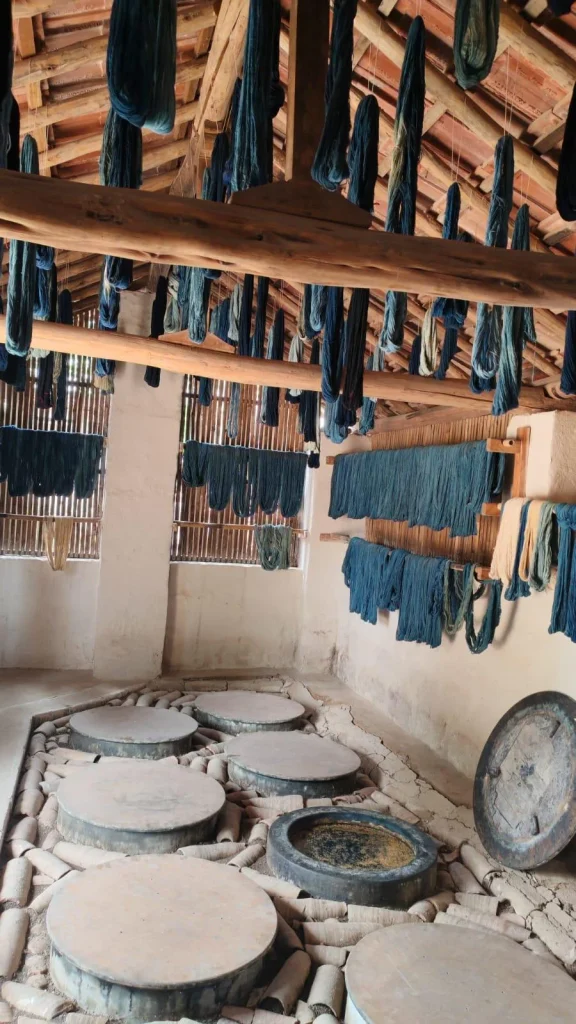
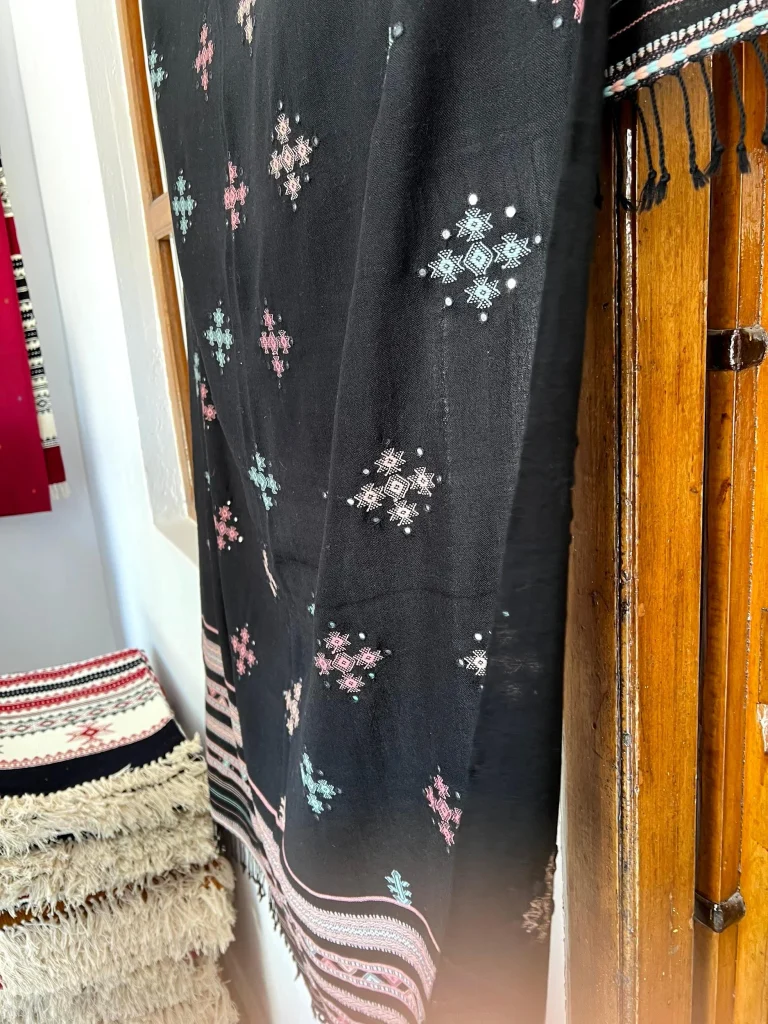
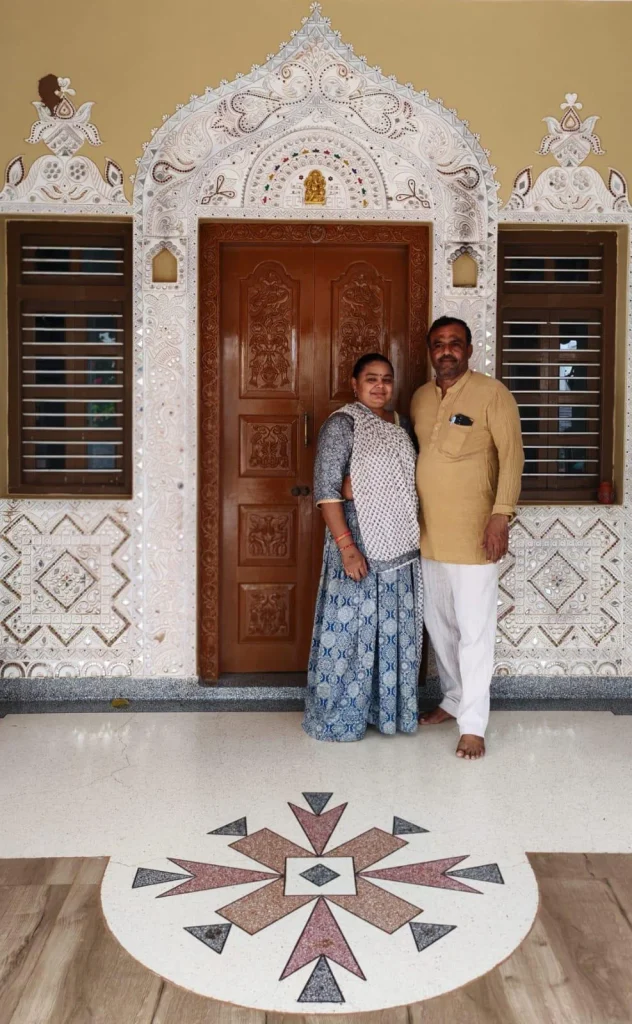
This family matches the precision and aesthetic sense of any Japanese or European craft enterprise in cleanliness,customer interaction and quality. We hope more master weavers someday reach this level. Their weaving of Kala cotton, indigo-making and storage facility is a must visit. A visit to their beautiful house which was designed by his wife and children in Lipan artwork. This was followed by lunch where we had the most special dish Undiyo.
Later we visited Khamir Crafts and met the Director Kavya Saxena and Ghatit, former Director of Khamir crafts, founded in 2013 with just four weavers, Khamir has now grown to around 80 weavers. Director Kavya Saxena shared the organisation’s success in working with government schools to teach craft skills. We were delighted to learn about founding member Durga Ramaswamy, and their connections to Uzramma, Jagada Rajappa, Annapurna Mamidipudi, and Satish Poludas with Ghatit. We were taken on a tour of the premises, saw recycled plastic that is repurposed, pottery and block printing. Khamir is known for its fabric, its texture in different hues. They usually cater to bulk orders. Ghatit took us on a nostalgic trip mentioning all those who were in the project, sitting under the shade of trees, while sipping hot tea and overlooking Khamir’s beautiful campus, that reminded me of Auroville in Pondicherry. Qasab, an NGO that started in 1989 became a producer owned organisation in 2010. Qasab represents 11 ethnic groups and 1500 women artisans. The organisation runs without CSR funds or donations which is remarkable. It is managed by CEO Director Puneet, while co-founder Pankaj Shah continues to mentor the team. They are known for traditional embroideries and other crafts. The most exquisite collection which is a common thread that we have noticed everywhere we went.
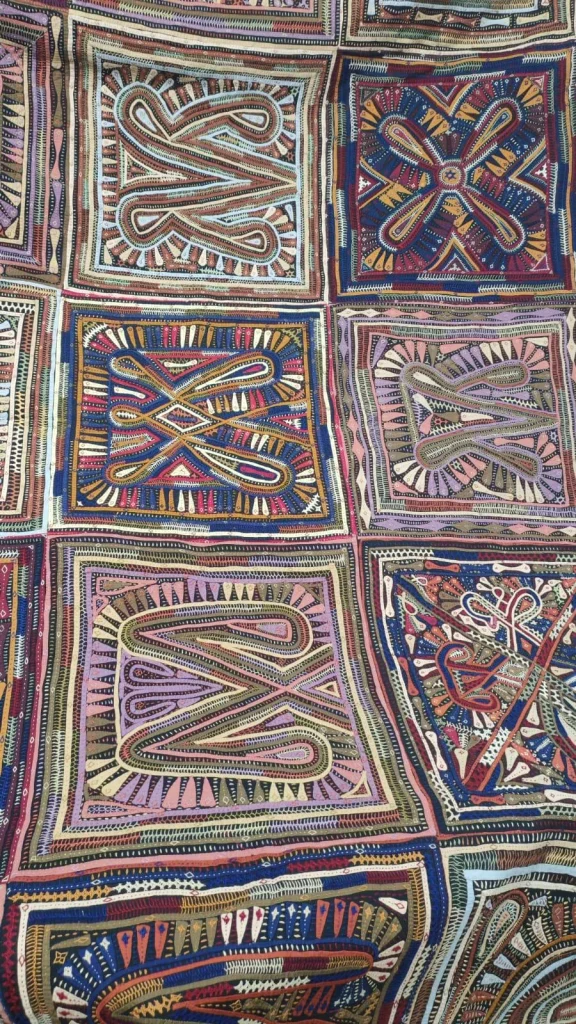
On the 19th of November, after a 7 hour long drive, we arrived in Ahmedabad which is also declared as a UNESCO’s World Heritage City.
Before checking into the hotel ITC Welcome, we were off to a visit to the studio of Mata ne Pachedi to meet artisan Sanjay whose family is the only one that is continuing with this craft along with his son. The father and son are both National Awardees. What drew our attention is how this art has evolved over time. Just ten years ago it was bold, just like what used to be a backdrop of the goddess in temples and homes. This family has elevated this craft with intricate work in the same style! That has caught everyone’s attention. It must be seen to be believed. The first thing that we noticed was a ₹ 7 lakh worth large wall hanging in the making. Several students and family members were on the job. This too is a form of Kalamkari, just like what we see in Srikalahasti, Pedana and Polavaram.
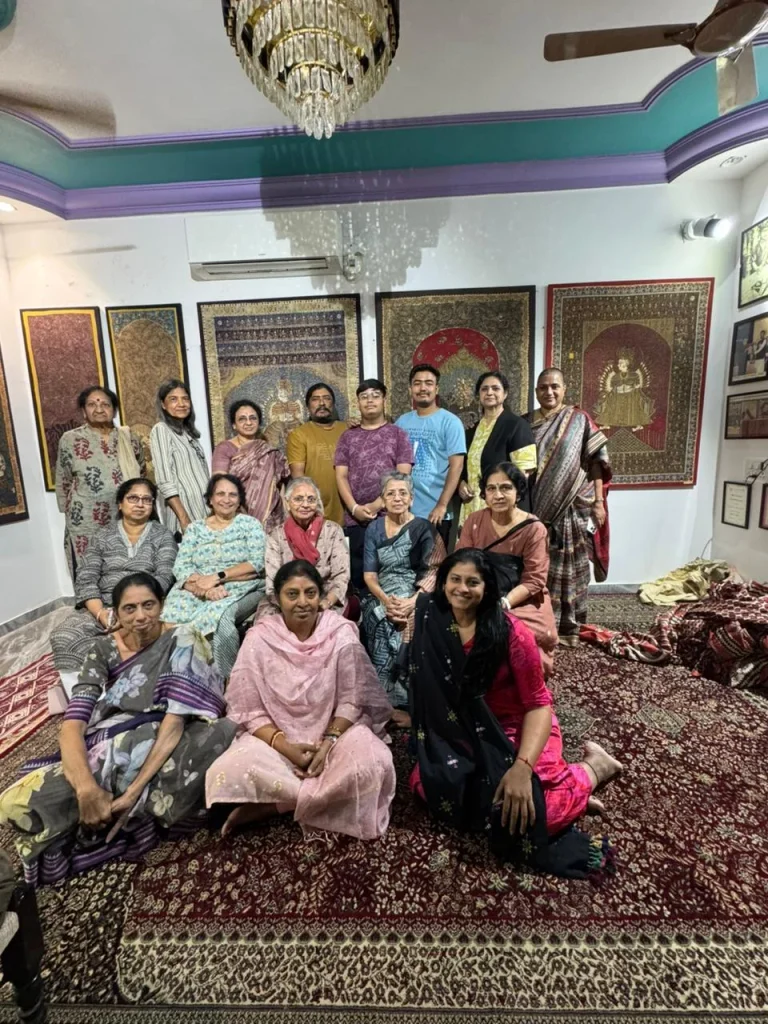
At sundown we were in House of MG, an old mansion in Ahmedabad, a heritage mansion built in 1904 by textile Magnets Mangaldas and Chimanlal Giridhardaas that has been converted into a boutique hotel by Abhay Mangaldas in 2014. This indeed was another landmark that needed a prior booking to see the premises. What greets us is a large brass container with a lid that was used for loading it with dowry during marriages. The tour took us to an indoor swimming pool, art collections, there was beauty within and outside which was worth the visit. And to top it all, it is a sit down dinner at Ahashiye (open to sky) served with Gujarati Thali course meals. This whole experience takes at least two hours.
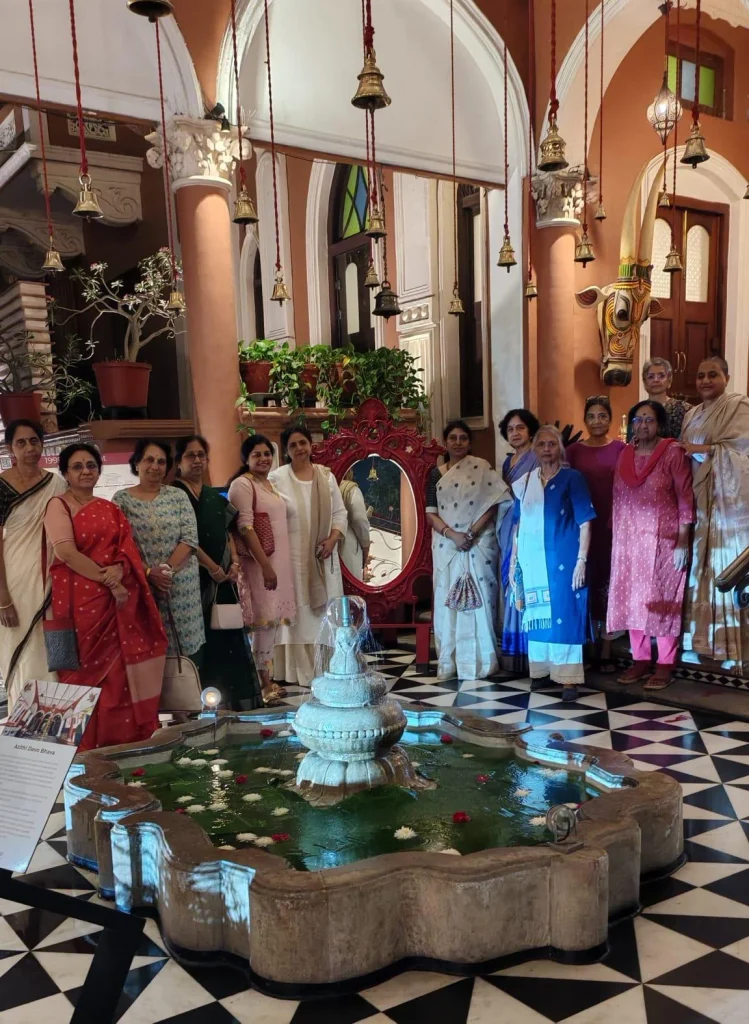
On 20th November, our visit was to Patan, a place where Patan Patola, Rani ka Vav, the sun temple Modhera, and several Jain temples exist. This was an all day program that took us 3 hours to reach Patan from Ahmedabad. On reaching Patan, we visited a Jain temple and had lunch at a Dharmsala run by a local well known family. We were served a simple meal with piping hot phulkas and given a hamper each of khakras. After lunch we visited Patan Patola Heritage Museum that is recognised by UNESCO where we were received by Savan Salvi and Rahul Salvi – 28th generation Patola weavers who took us around the facility and explained their lineage and the history of this heritage weave which is a precious garment to be worn when getting married because it is made with utmost precision which come next to godliness which explains why it is so revered and sacred. The family explained how people use the name of Shilpaguru Vinayak Salvi to sell fake ones.
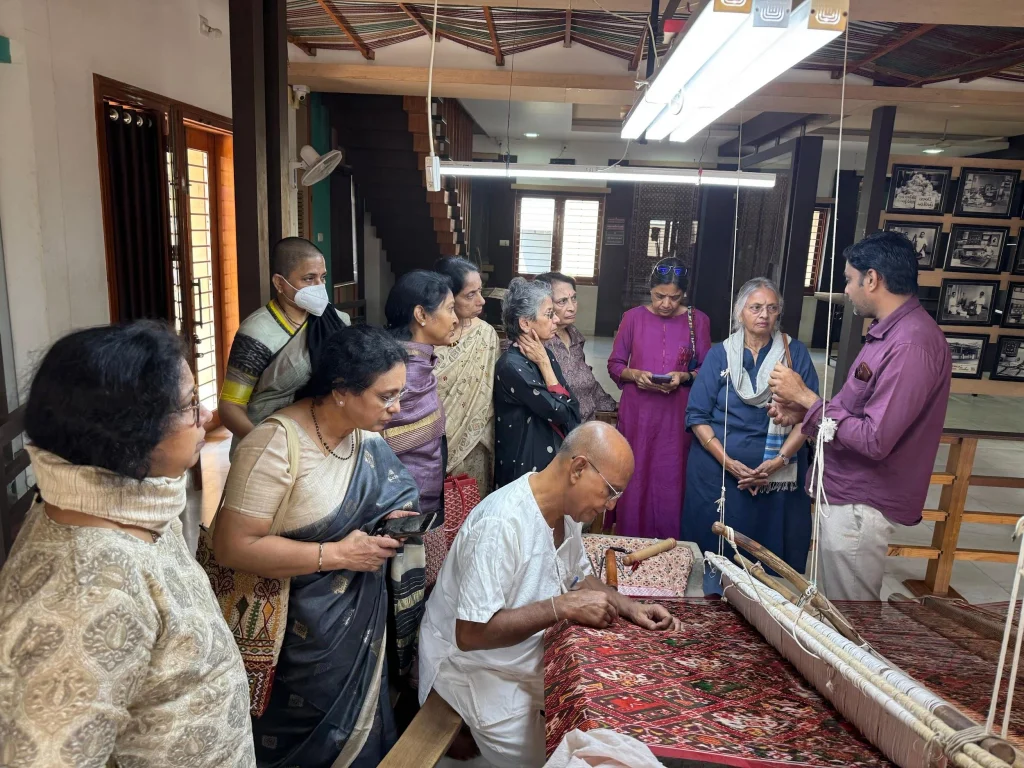
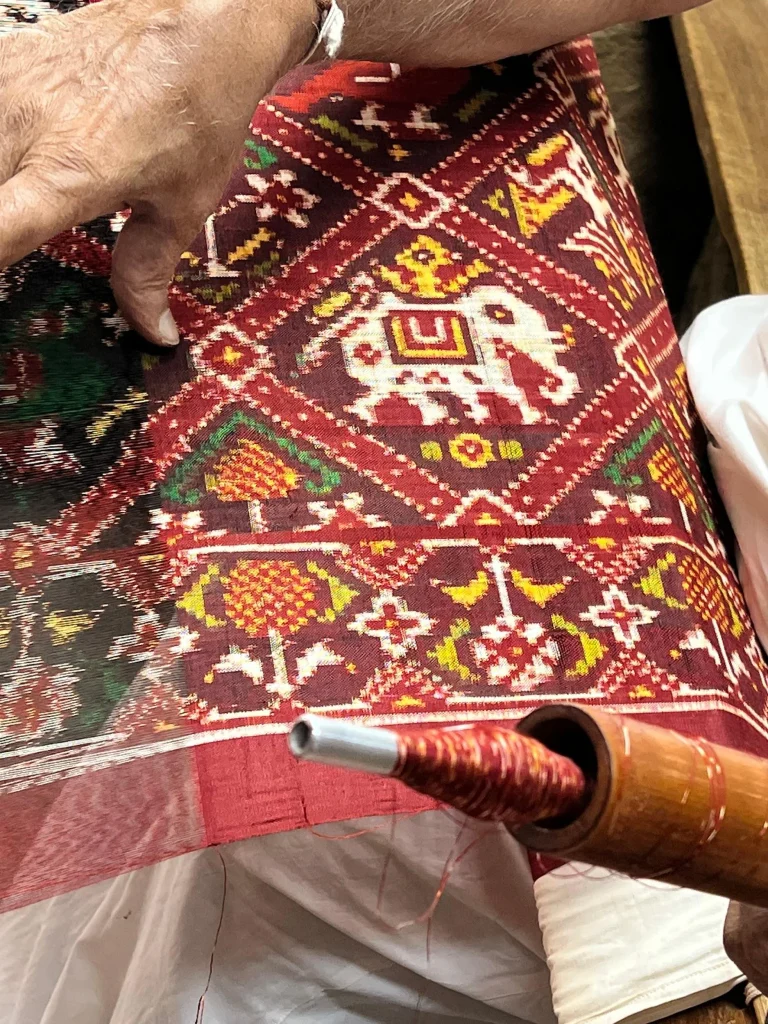
This is the only family who weave authentic double ikkat Patola with natural dyes. The design is created on the yarn itself, through an intricate tie-and-dye process.one natural dye saree takes around nine months and costs about ₹4.5 lakhs. ‘Nari Kunj’ with parrots and elephants, is the most popular design. We were witness to the making of a Patan saree by Bharat Salviji on the loom. They traditionally use silk from China which connects to the silk route story. The final product is light weight and non-crushable. We were happy to see our Govardhan Garu’s Telia Rumal on display that he has donated.
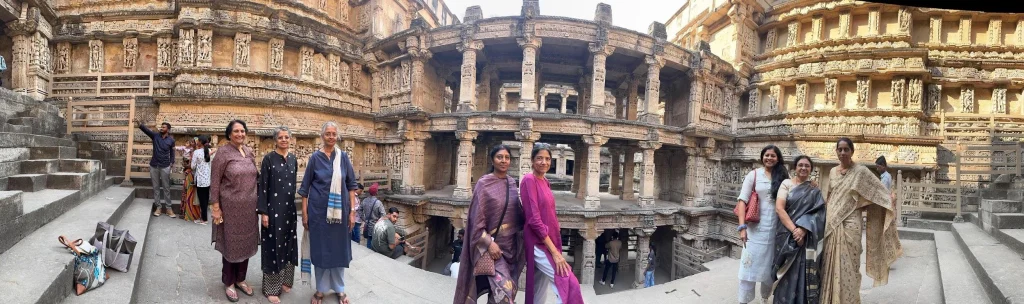
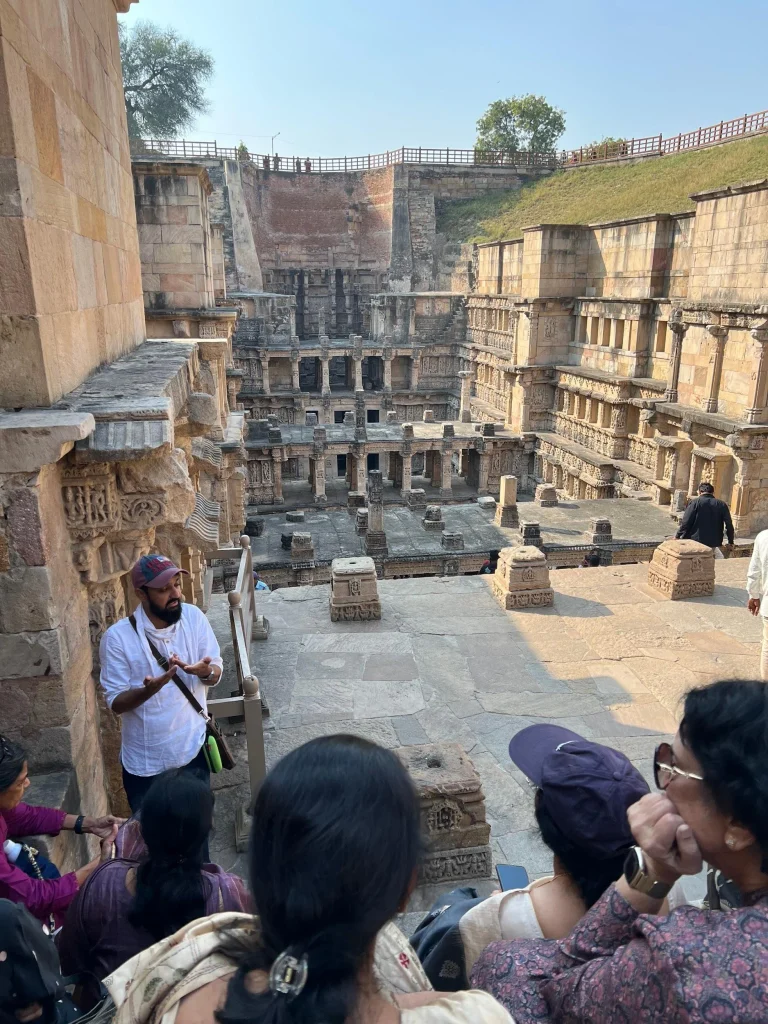
Rani ki Vav is depicted on our 100 Rupee note! This was our next stop. This is another UNESCO World Heritage site built in 1063 by Rani Udayamati of the Solanki dynasty which was discovered in the 1940s. It is a magnificent site which is 7 floors below the ground level. One can easily think it is for preserving water, maybe it was for that too, but according to Umer, our guide who is passionate about history and ancient heritage sites, this was built as viharas, a resting place for travellers and Rani Udayamati decided to build 7 floors into the ground to keep cool in summers for them to rest. Each pillar is so intricately carved with gods and goddesses. This is one of the architectural marvels.
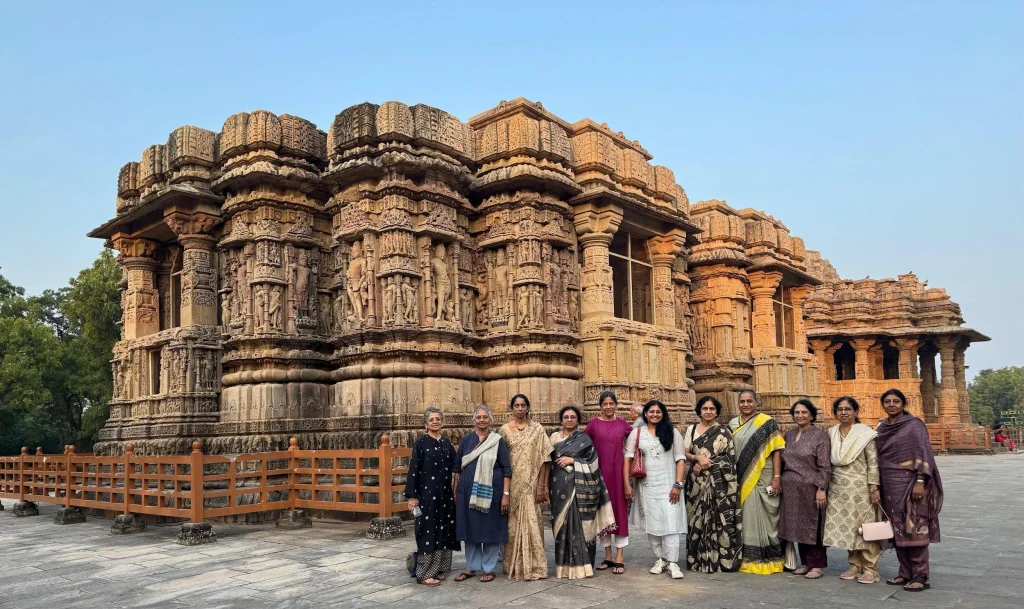
Modhera Sun Temple was the last visit for the day just in time for sunset which is the best time to see the temple. Built by the Chalukyas in 1026, it is dedicated to the Sun God. Another site may be added to UNESCO all in Patan.
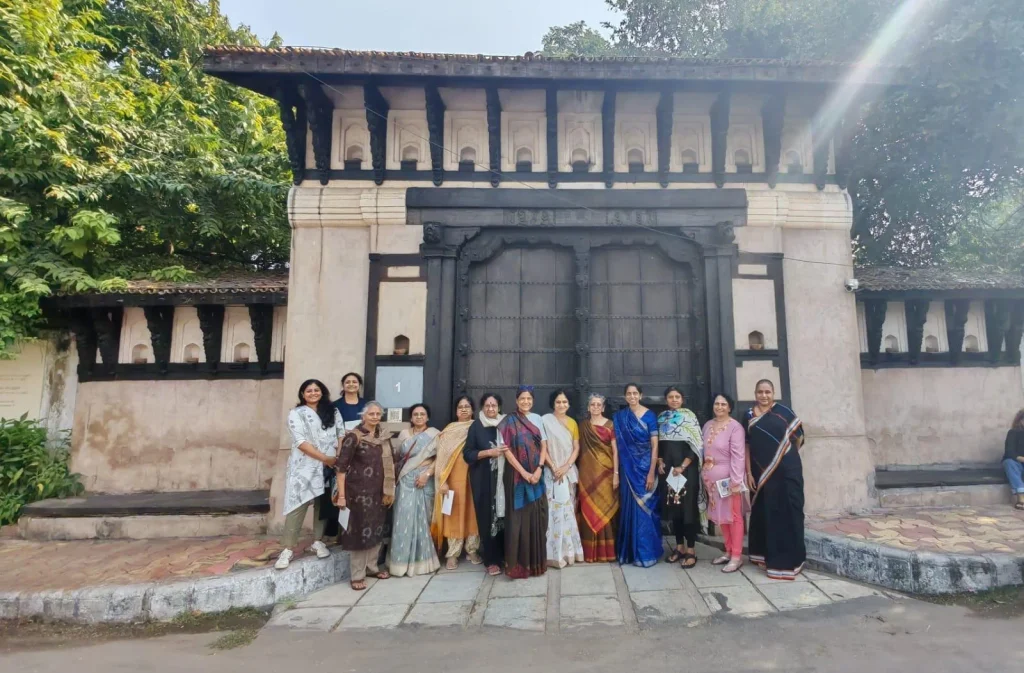
21st November a visit to Calico Museum was the grand finale of our fellowship meet to Gujarat. The museum is an offshoot of the famous Calico mills that was founded by Gira Sarabhai and Gautham Sarabhai. The museum contains the world’s finest collection of antique and modern Indian textiles, South Indian bronzes, Jain art, Miniature paintings and so much more. The lady who walked us through the collection herself created a drama around each piece with her narration. Some of them date back to 500 years and are all hand made. A tour to the Calico Museum needs to be booked in advance. Strict rules must be followed while inside. No photography or touching. The doors are shut if not on time.
Our takeaway from this journey that started from 15th November to 22nd. Gujarat holds masterpieces of human creativity in craft, architecture and culture. What is admirable in Kutch and Ahmedabad is their approach to business. Those who are continuing in their respective art forms have learnt to make it work by innovation, quality and transforming their workspaces into visitor friendly environments, maintaining simplicity, humility and warm hospitality. Above all, the way of selling happens effortlessly,without a single sales pitch.
