If there is a wedding in the family and have not yet heard of Dharmavaram pattu
handloom sarees, which are comparable to the best in the country, then you have
yet to discover the skills of our weaver community of Anantapur district.
About 40 to 50 percent of the population here belong to either the Padmasali,
Devanga or Togata community who are traditional weavers known to be practising
for the past 500 years and silk handloom sarees have been produced here since the
last 100 years much before other places. Weaving skills are passed down from one
generation to the other but in the past 20 years none of the younger generation are
opting for this craft as a profession, just 2 percent are said to be interested and as of
now those in the industry are 45 and above.
Most of the handloom weaving is done through societies or master weavers. There
are 255 societies as per govt records and an equal number of master weavers. It is
estimated that there are 40,000 looms in the district and each loom requires 5 people
working on it so approximately 2,00,000 are employed. Society members get
subsidies and other govt benefits and market through APCO, whereas the master
weavers who have attained proficiency in the craft over the years, now have their
own units with looms and weavers and market in shops of major cities and towns in
different states like karnataka, Telangana, Tamilnadu, Odisha, Kerala, and Andhra.
Sarees sold at one place could be different from that of another due to customer
preference.
Curtesy: Timbaktu
Timbaktu Weaves an NGO enterprise
Some of the clusters of the district are Dharmavaram, Hindupur, Yadiki, Tadipatri
Uravakonda, etc. Mulberry silk yarn is sourced from Karnataka and dyed locally. The
weavers of Anantapur district adapt to the changing situations. They have
transitioned from mechanical looms to card punching jacquard in the 90s to
electronic jacquard looms as well. They consider themselves second only to
banarasi weavers where jacquard skills are concerned and are proud of their
capabilities. The saree too has seen a transformation after the 90s. Earlier designs
were by weaver’s imagination, quality of product was 95 percent and there was more
work discipline. Now with jacquard looms, designs are punched into cards or
computers and quality is much better …about 99 percent.
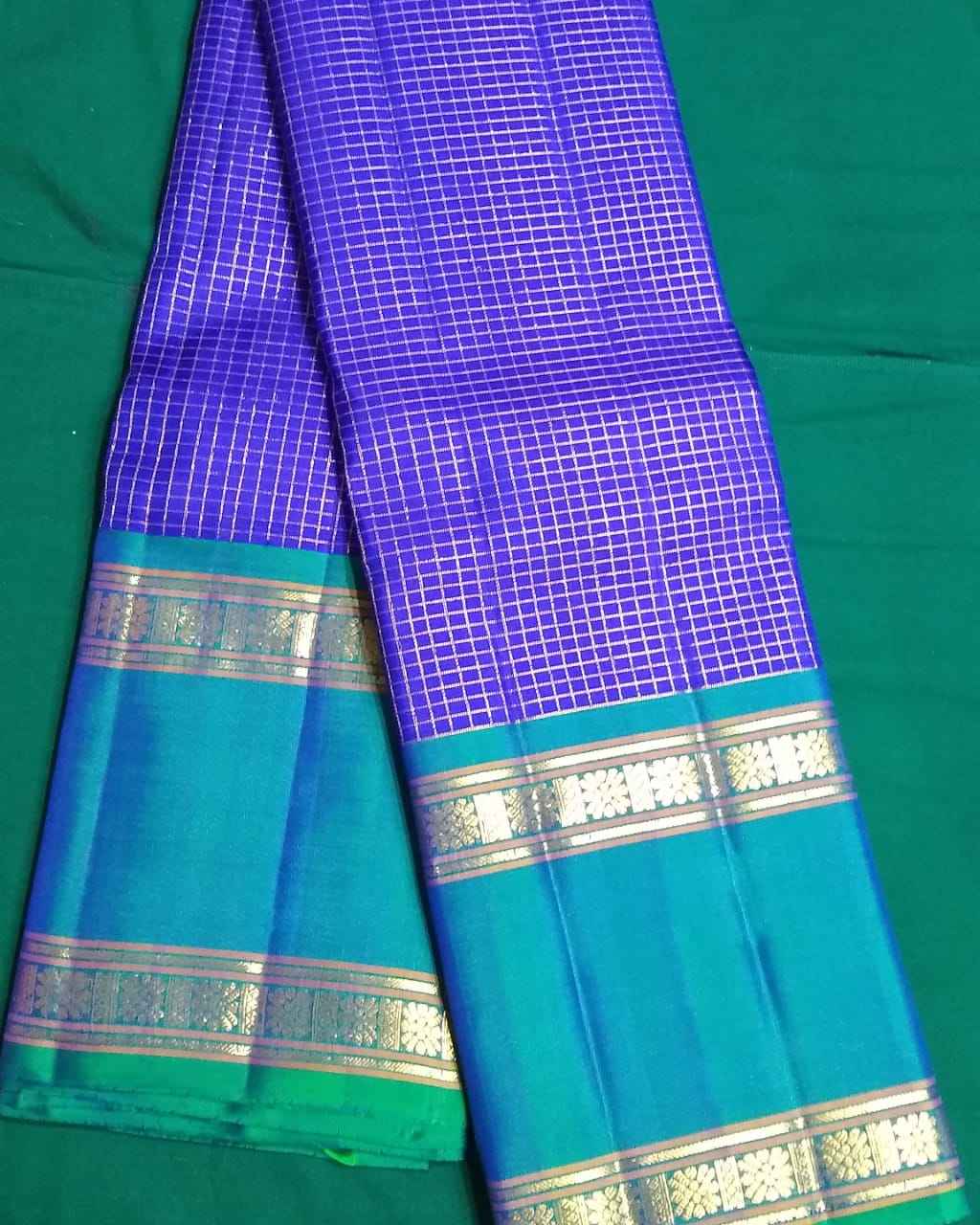
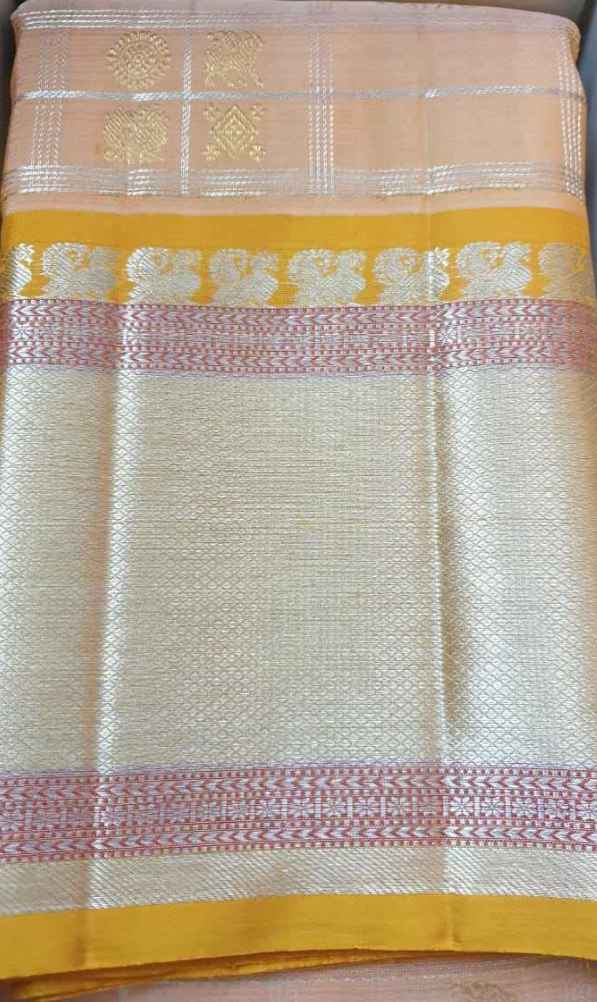
The designs are mostly of temple art motifs or even contemporary. The body of the
saree could be either of single color or double shaded, the border with contrasting
colors is called korvai border and broad pallu with contrasting or self color. The price
depends on the design, silver used, handwork and time taken to complete the
saree.
Dharmavaram handloom silk sarees, as a brand, is less known to the rest of India,
but the old timers of Andhra Pradesh definitely recall having one in their collection.
Today Dharmavaram silk sarees are third in demand as wedding sarees after
banarasi and Kanjivaram sarees.
An authentic handloom silk saree is wrinkle free, drapes well, falls well and has a
considerable weight.