
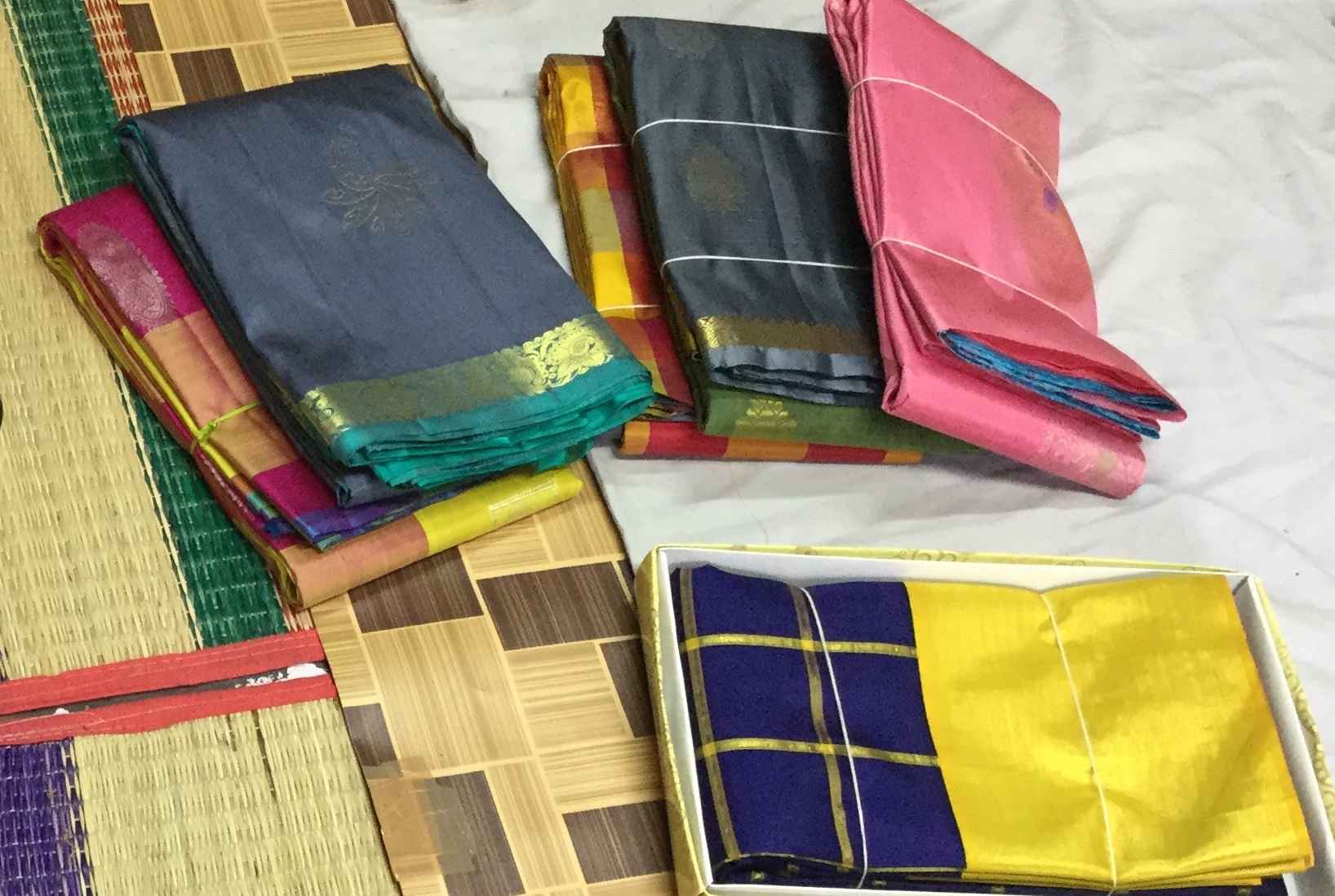

Narayanavanam, Varadayyapalem, Sri Kalahasthi, Sathyavedu and Puttur are
famous for handloom weaving in Chittoor district. silk and wool weaving is famous in
Chittoor urban, Palamaner, Madanapalle and Kuppam Mandal. Handlooms in the
district at present are producing solid bordered sarees, dhotis, lungis, towels,
bedsheets, shirting and angavastram as chief products. At present (2019), there are
8595 handlooms in the district.
Narayanavanam sarees are woven in a single weave that makes them light weight
sarees. This village has been producing silk sarees for many generations dating
back to decades before India got its independence. The art has been passed down
several generations and they swear by handwoven silk. Silk farming happens in
regions of Karnataka around Bangalore and they receive silk thread from there.
The process in Narayanavanam begins at the dyeing stage. After dyeing the silk is
then set to dry and kept aside for the warping process.
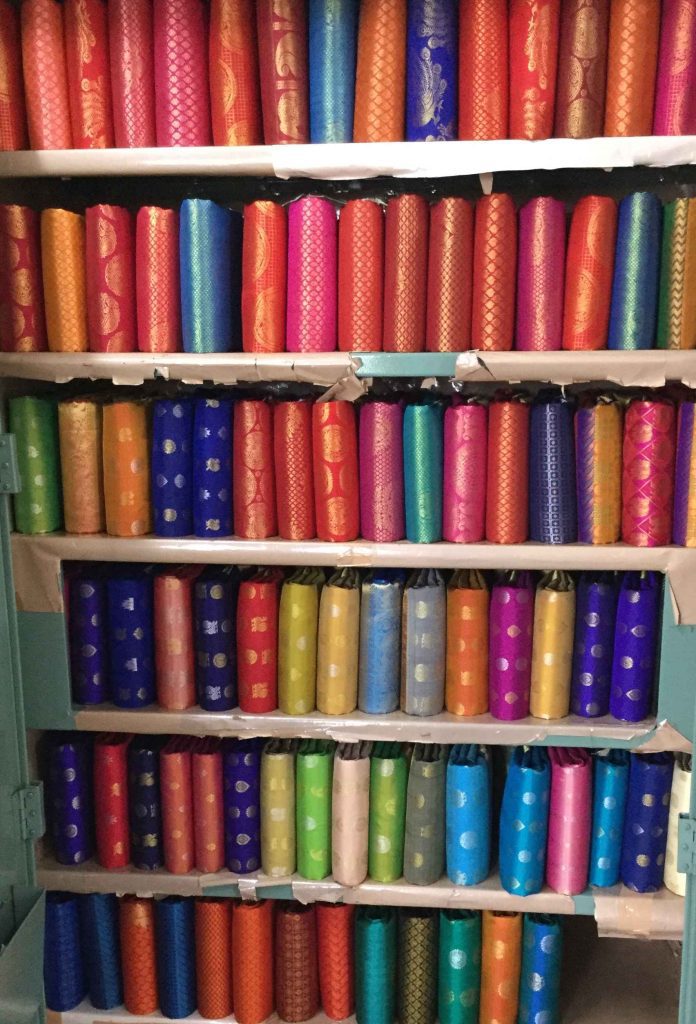
They get the Jari thread from Surat. They are also available in different colours, most
standard being silver and gold. After the silk has been dyed, it is sent for the warping
process, where the silk thread is stretched and set according to the saree pattern.
This is entirely a manual process and what makes handwoven sarees special. The
sorted silk thread is then rotated on wooden beams, with cardboard sheets inserted
in regular intervals for protection.This is then sent to the weaver.
The weaving machine is simple and complex at the same time. In handloom weaves,
the weaver has to use both hands and feet in a continuous process.
The main saree body yarn that has been through the warping process as in the
above step is horizontal threads of the saree. The vertical threads are loaded on
something called the weft. The weft is a block of wood with both sides pointed and a
hollow in the centre where the vertical thread spool is loaded. There is a rather
simple machine that sets the thread on this spool. The weaver sets the horizontal silk
threads through the weaving machine, as there will be threads that get pushed up
and those that get pushed down during the weaving process. The weft moves like a
bullet from end to end as the vertical threads are woven with the horizontal. A
separate line introduces the Jari thread for border, body designs or bhuttas. Small
bhutties are done with the hand, while larger designs are done either with the weft by
hand or with the Jacquard method. The up and down movement of the weaves is
controlled by the foot pedals and the weft is controlled by hand. Throughout the
process, glue is applied across the saree in small parts as the weave progresses.
The weaving process differs based on the complexity of the saree design and takes
anywhere between 1-3 days.
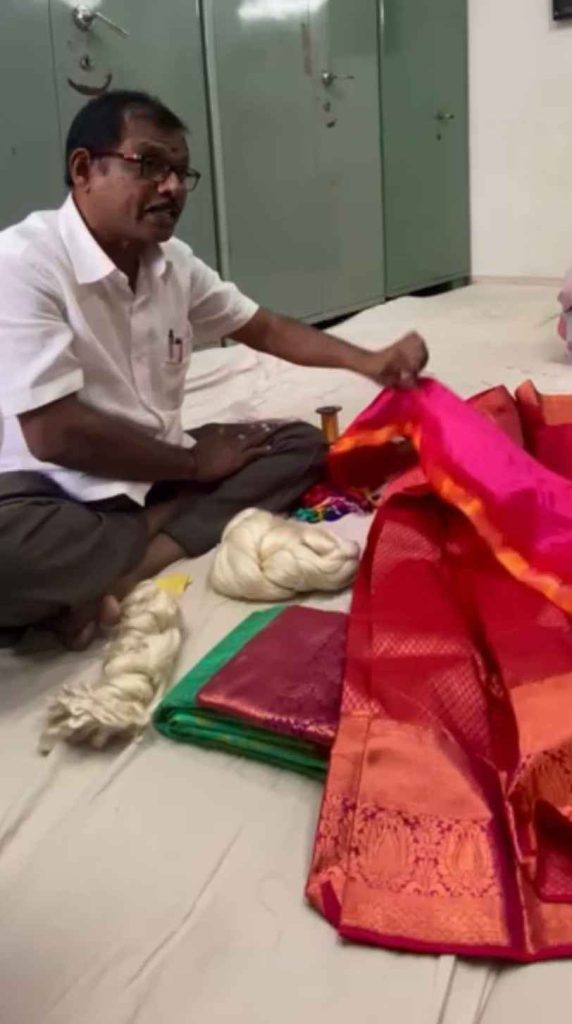
In Madanapalle the Process followed here is very similar to those in
Narayanavanam, except that they are Double weave sarees. For this, one has to set
up the loom with twice as many warp threads and are woven with two shuttles rather
than the usual one.
Practising since four generations is the family of weaver Sama Desaiah from
Gollapalli village in Chittoor district. As a member of Arunachaleswara HWCS, he
visited the state national handloom expo – 2022 in Vijayawada. This society had 100
looms but now only 25 are active and marketed in Vijayawada, Visakhapatnam,
Hyderabad and Delhi. He finds Venkatagiri more saleable than Kanchi pattu.
Gollapalli is 10 km from the beautiful sada Siva kona waterfalls and kailasapuram.


