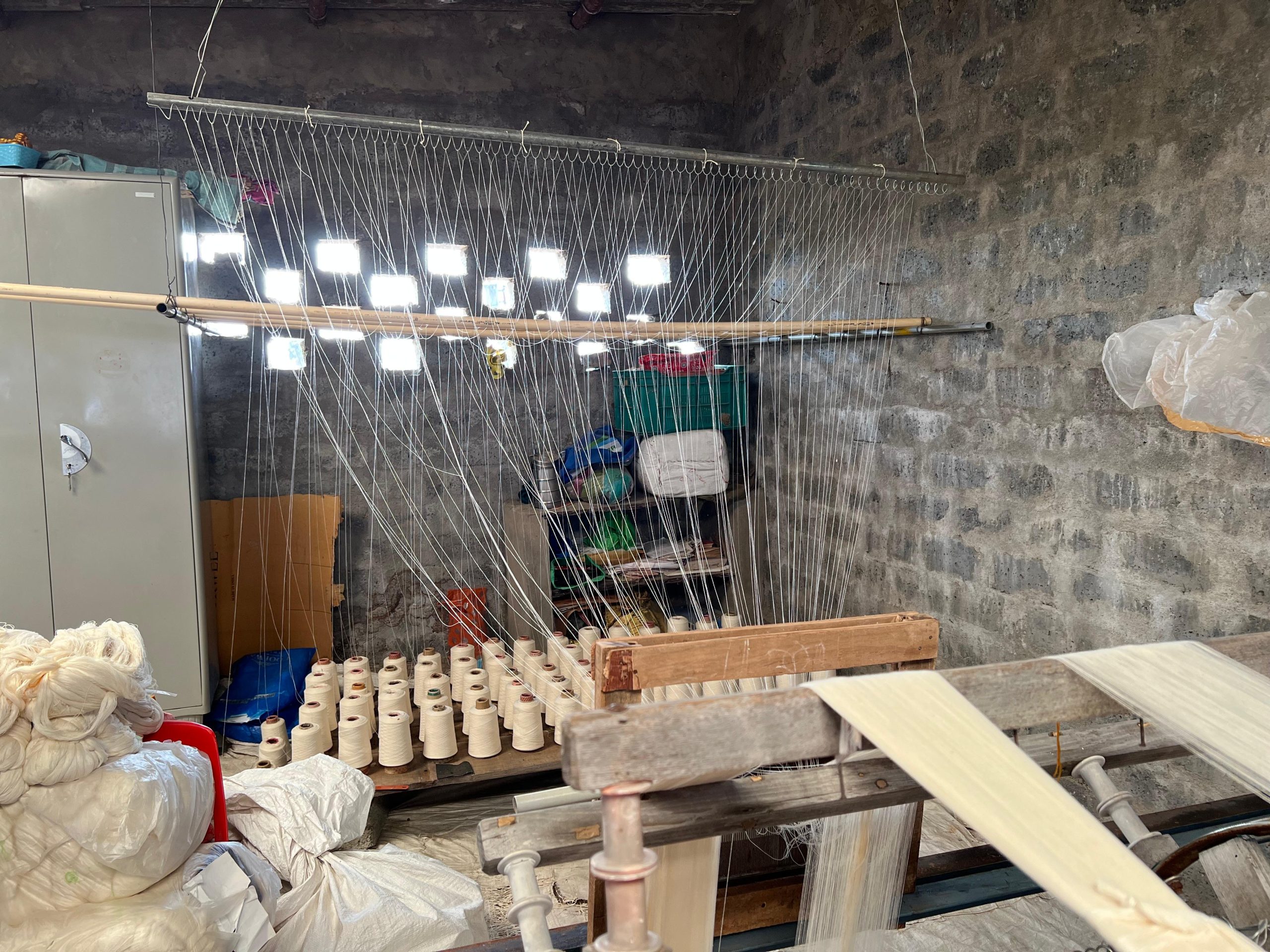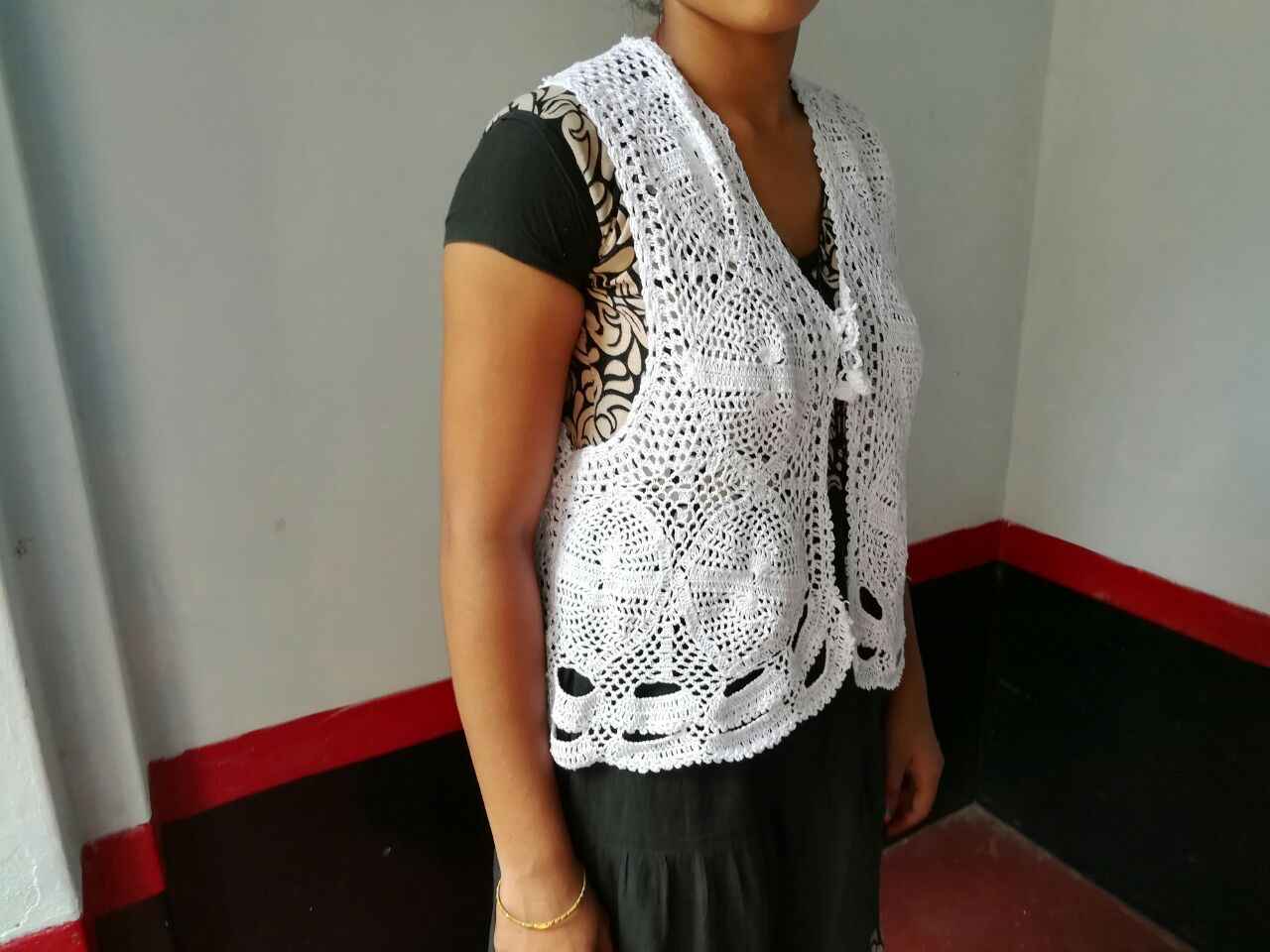
Most of us would not know of Girija bondapalli, but this down to earth woman is an
entrepreneur and manages an NGO. We got to know her through a live interview
conducted by ccap on Instagram during covid and she says during this time she was
able to reach out to more people because of zoom and to try out new designs.
Hailing from a small village in west Godavari district in Palakollu Girija learnt this
craft from her parents and grandparents who did crochet lace work for a living.
Initially she practised with coconut needles and thread. Only when she perfected the
chain and small designs was she allowed to use the real needle. The needle could
be of brass as in earlier days, but now, she says, it is either steel or aluminum and
they work with needle size 0.5mm. Earlier the thread too was fine, now they use
slightly thicker and softer thread. Depending on the quality of work required the
thread too is decided. Anchor thread gives better finish, she says.
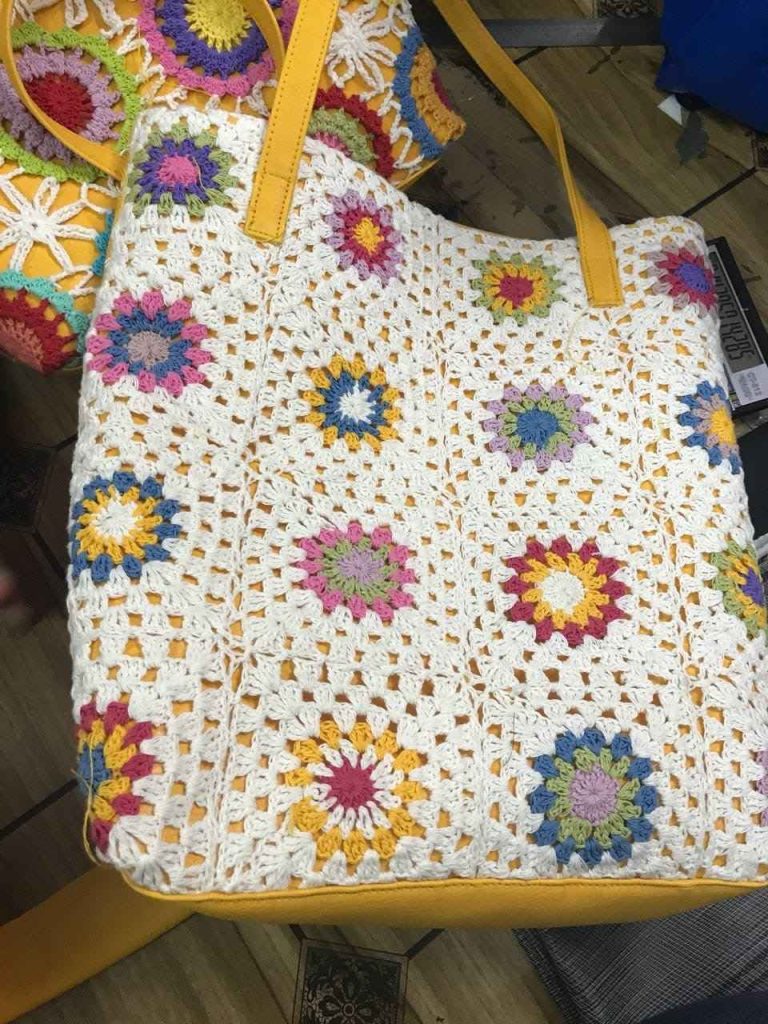
She also runs an NGO – lace knitting and rural development to help market women’s
crochet work. It was her grandparents who first started the business when students
from Iran and Iraq used to buy their products to give as gifts back home. They also
marketed in pune, Mahabaleshwar. Here 99.9 percent are women artisans and they
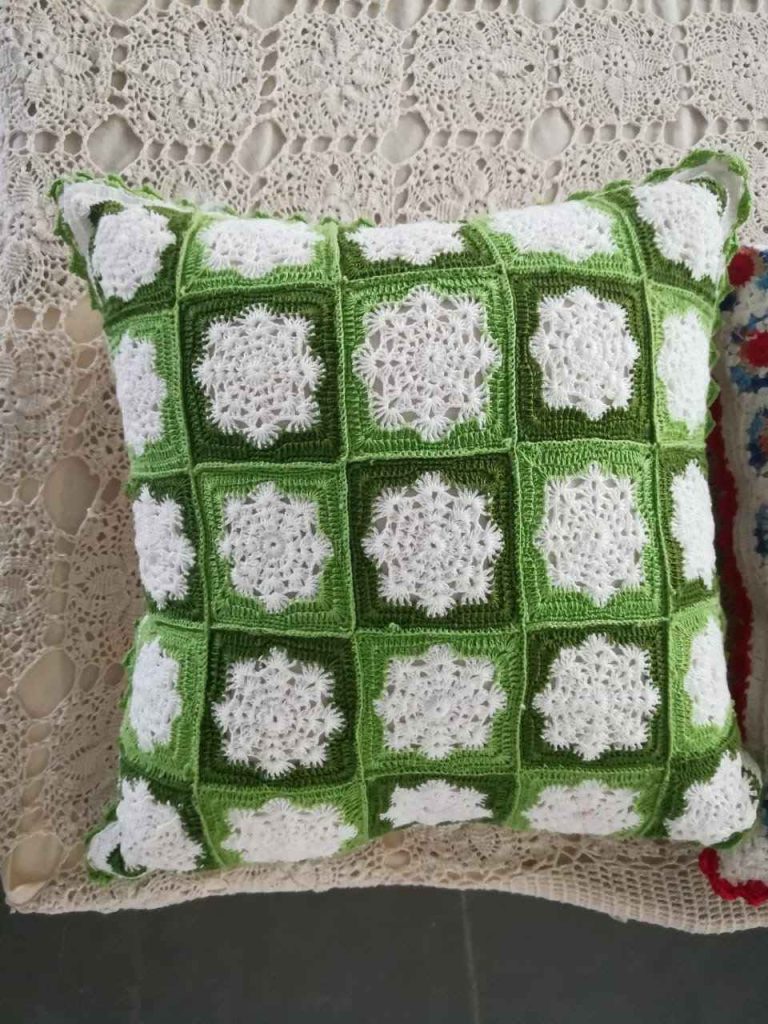
make a range of items like border lace, ponchos, shrugs, soft toys, cushion covers,
Kalamkari with lace border sarees and dupattas, skirts, dresses etc.
Some of the exhibitions that she attended are Crafts Council of Telangana, Chennai,
Delhi and Germany too. In 2016 she received a state award. Raw material is bought
from Delhi and is dyed locally since they had learnt the process of dyeing from
artisans of Salem. They also test the thread for color fastness.
About 600 women are employed by Girija lace industry and the NGO has 1000
members. During carona she got the members to take artisan cards and mudra
loans to tide over the crisis.
150000 to 200000 artisans are in the industry in East and West Godavari districts.
A small table cloth takes them about 7 to 10 days to complete while the bigger
spreads are worked in smaller parts and joined. This could take upto 3 months
depending on size.
Customers can send their sarees for a customised crochet border.
Girija Bondapalli (entrepreneur and NGO)
7660820603