
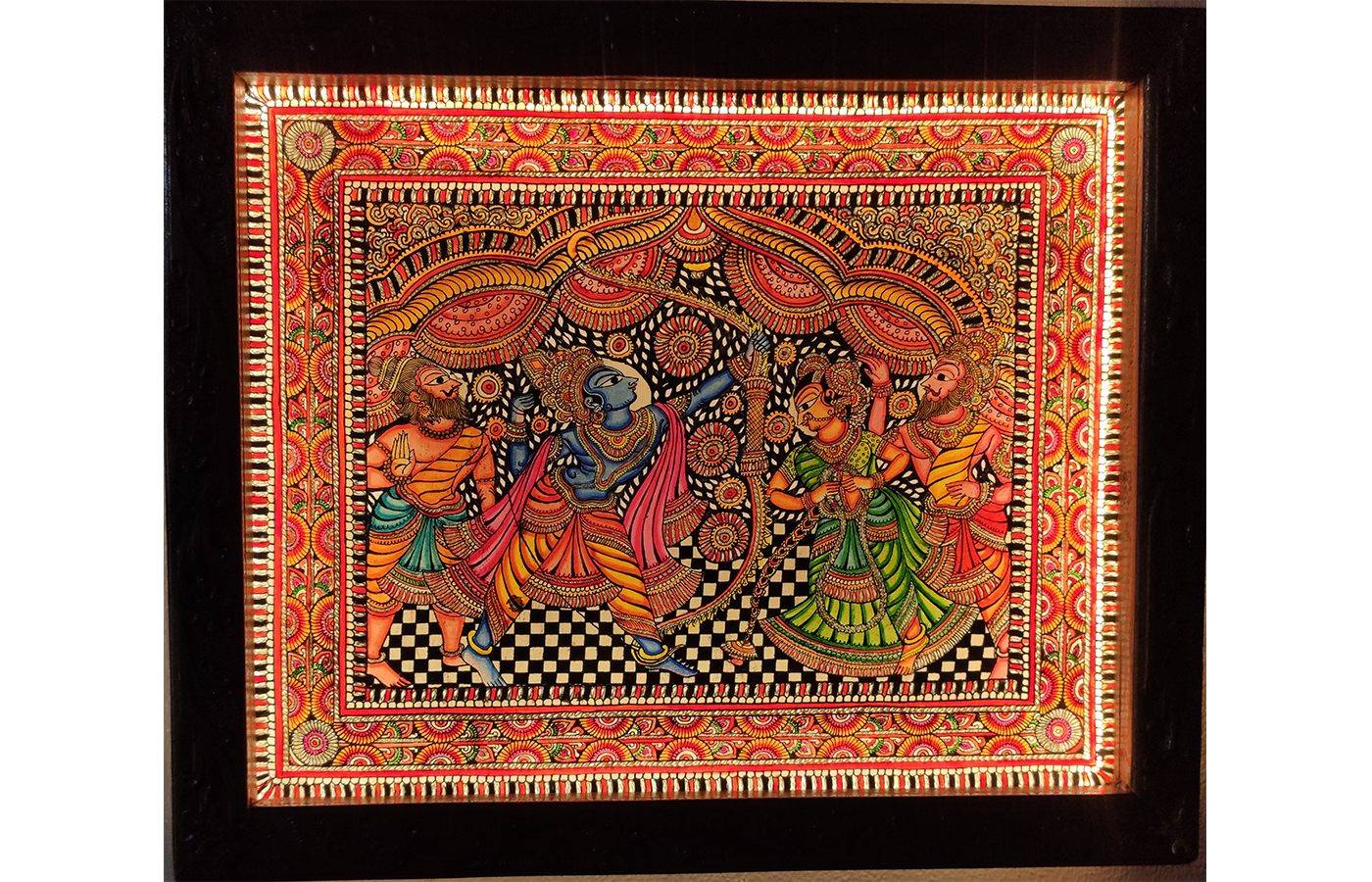
Tholu Bommalata
If you have ever wondered how people in ancient and mediaeval times entertained themselves when no cinema, television or ott existed …you need think no further! It was puppetry in its various forms which was the beginning of theatre. The artists used to perform in villages and enthral the audience with folklore and epic stories.
This art form originated 1500 years ago in Maharashtra and became part of Telugu culture due to the migration of artisans.
Madhavapatnam, near Kakinada, DC Palli in Nellore district, NimmalaKunta in Anantapur district and Narasaraopet in Guntur district are the main clusters for leather puppets in Andhra Pradesh, but Nimmalakunta puppeteers are known to have gained national and international fame.
The puppet shows had something for everyone – divine epics for the devout; and comic relief for the distracted. Puppetry is still practised today, especially during festival occasions. It is the song of the artisan and the dance of the puppets.
In Nimmalakunta, artisans practise this as a hereditary craft. The raw materials used are goat hide and sheepskin and in addition to this, waterproof colours, paint-brush and mould are used for lamp shades. The colours which are derived from vegetable dyes, like brilliant red, green, white, yellow, brown and orange are popular. Creating small holes inside the decorative patterns using a pogaru (chisel) enhances the items. After colouring, the lampshade is dried in the sunlight for two to three days. Hindu epics like Ramayana and Mahabharata inspire artisans to create lampshades of attractive shapes and sizes.
The above youtube video is a puppet show on ‘Sundar Kanda’ of Ramayana, presented by Indira Gandhi National Centre for the Arts and created by Anjaneyulu shadow puppet theatre, Andhra Pradesh.
Some artists of Tholu Bommalata who have been associated with ccap and made a name for themselves with the craft are mentioned below.
Sindhe Sriramulu
Sindhe Sriramulu, a leather puppeteer learnt the craft from his mother and continued after his father passed away. He started giving voice to all male characters in the 7 kandas.
40 families of Nimmalakunta manufacture lampshades and puppets but only 10 to 15 families have the skill required to perform in a show. Sriramulu is able to perform in 10 to 15 shows a month. Meanwhile, his mother Sindhe Bhagyamma trains women in drawing and painting as part of Kalakriti – a cooperative movement to promote the art form. (Indian Express 2020)
Contact number
9177071767
Dalavai Kullayappa
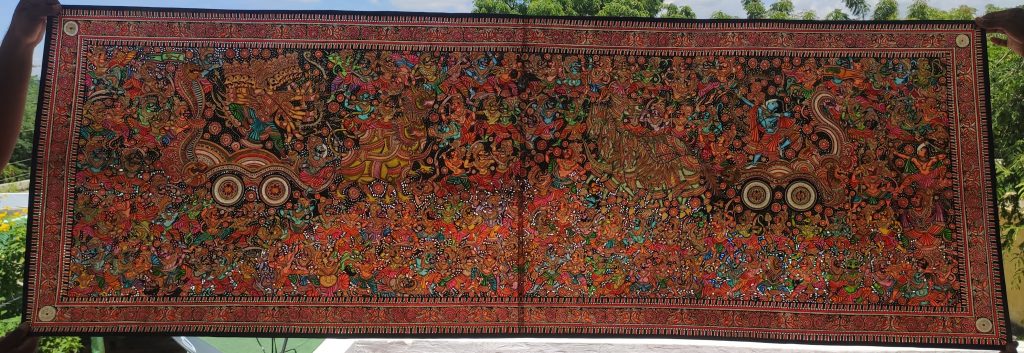
Dalavai Kullayappa has been closely associated with ccap and is known to be an artisan par excellence. He has a team of 6 artists and the theatre group is named Chitrakari Tholu Bommalata.
Kullayappa learnt his skills from his father and also from the late Dalavai Chinna Narayana. The artisans have formed a society to make their art sustainable. The society ensures that all members get opportunities and some form of income. It is said that people used to travel distances to watch them perform.
In order to sustain, they have diversified to making items like lampshades, cell phone covers, key chains, handicrafts and paintings.

Kullayappa also participated in creative Dignity zoom programs during the pandemic and proved receptive to changing situations.
Contact number
9959309029
A puppet group from Kerala Tholpavakoothu presented a short clip on World Puppet Day (22nd March 2020) with a message to stay safe and break the chain during Covid 19.
Sindhe Chithambara Rao
In the Rayalaseema region of Andhra Pradesh, once a prosperous kingdom under the rule of Krishnadevaraya, exists Dharmavaram, which is known for its weaving industry, Tolubommalata and its local produce.
On the 13th of July 2017, our first visit was to meet with Master craftsperson Shri Shinde Chithambara Rao, a puppeteer who has travelled all over the world with his craft.
To begin this story, a group from Maharashtra migrated to Dharmavaram and brought with them the puppetry craft or Tholubommalata. Chithambara Rao is the 10th generation craftsperson continuing in this craft. It started off as a performing art during festivals or events and later they ventured into making decorative items such as lampshades, and wall hangings. These people are a close-knit community who are true to their craft and are very proud of their legacy. It has given them fame and recognition from all over the world. They make everything from scratch and use natural dyes too.
We had the good fortune of seeing a live tholubommalata in Chithambara Rao’s house. The whole family has a role to play during the performance. One is lending their voice, the other holding the lights, another moving the puppets, yet another helping to change the characters as the story progresses and of course the whole process of making these characters too!! This took us back to the olden days when we would witness these cultural performances in the villages during festivals or in front of temples.
We also had him perform at our exhibition and Chithambara Rao and his wife enthralled all of us in his booming voice!
During Covid , which was a trying time for everyone Chithambara Rao who has been bestowed with several awards, was commissioned to do artwork on the walls of some railway stations.
Contact number
9000894562
Madhavapatnam Leather Puppetry
A community named “Are Marathi” a tribe from Marathwada region of Maharashtra state, who are well versed in the art of playing the leather shadow puppetry are also engaged in making of the leather puppet items.
There are Co-Operative societies of puppeteers at Madhavapatnam. Here the artisans are mostly engaged in making miniature puppets and decorative cum utility items not for stage performance but for showcasing and wall mounting in the city and townhomes.
Anaparthi Janardhanamma, a stalwart in puppetry and veteran artist is among the last six women puppeteers of Madhavapatnam. She has appealed to the govt for help in the Hindu in 2020.


