Venkatagiri is Andhra’s best kept secret. Not many people from the telugu-speaking states know about the significance of the weave, notwithstanding its glorious past. The weave of Venkatagiri was once patronised by the kings and the queens. And today, we don’t even talk about – let alone celebrate – the exquisite GI tag the weave rightfully earned.
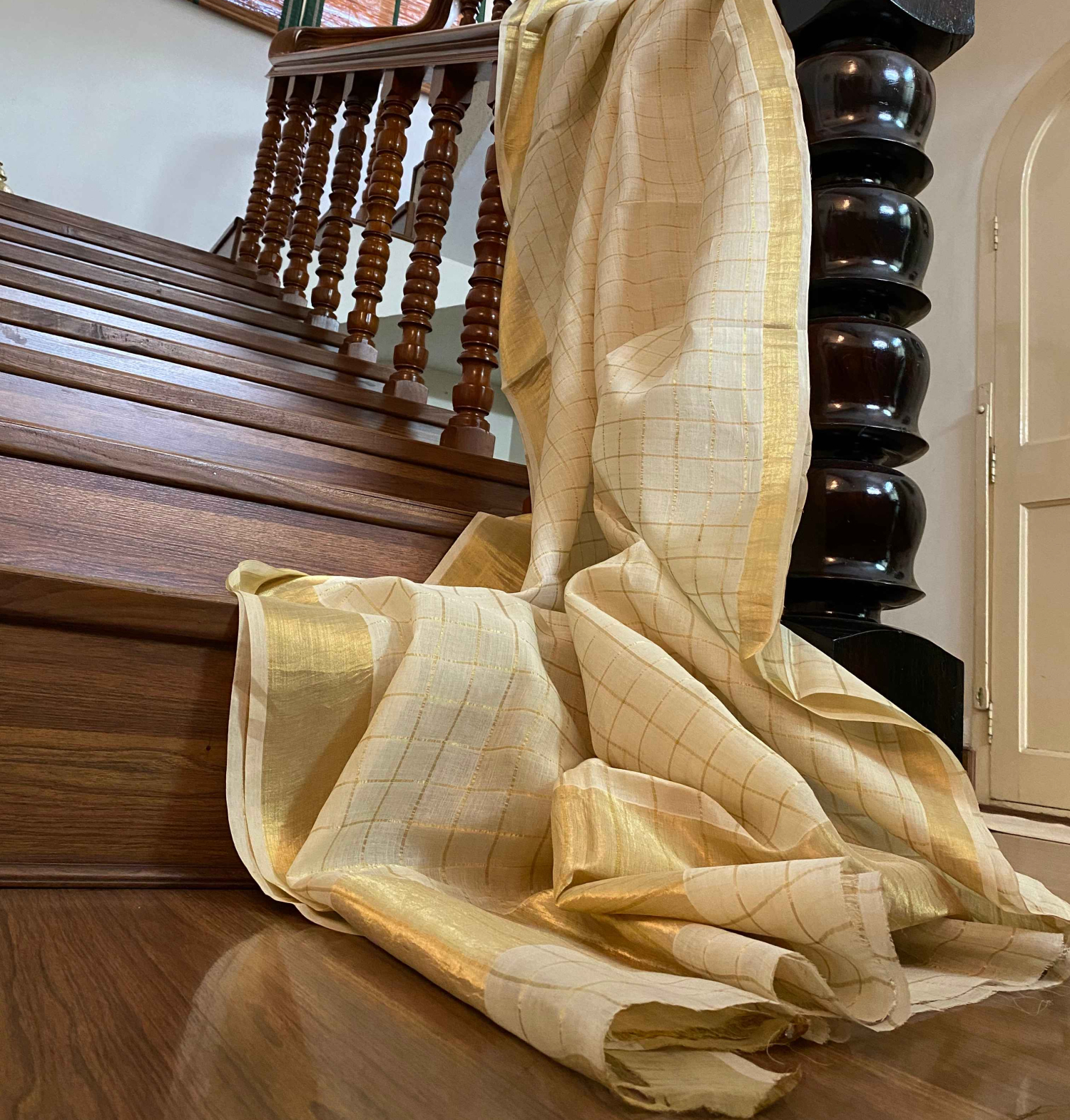
Venkatagiri juxtaposes the coveted hills of Tirupati. The town is situated in an important cotton growing belt that produces fine, sheer cotton muslins. As mentioned earlier, the weave was a darling of the Nizams and other kings that ruled the Andhra region. The royals preferred Venkatagiri to other weaves because of its high thread count. Moreover, artisans took pride in using real zari to weave the border and the pallu of a saree, and coveted gold-bordered turbans and dhotis for men.
But unlike other popular muslins (fine cotton) of India, these were coloured and arcane by the royals and zamindars of Andhra.
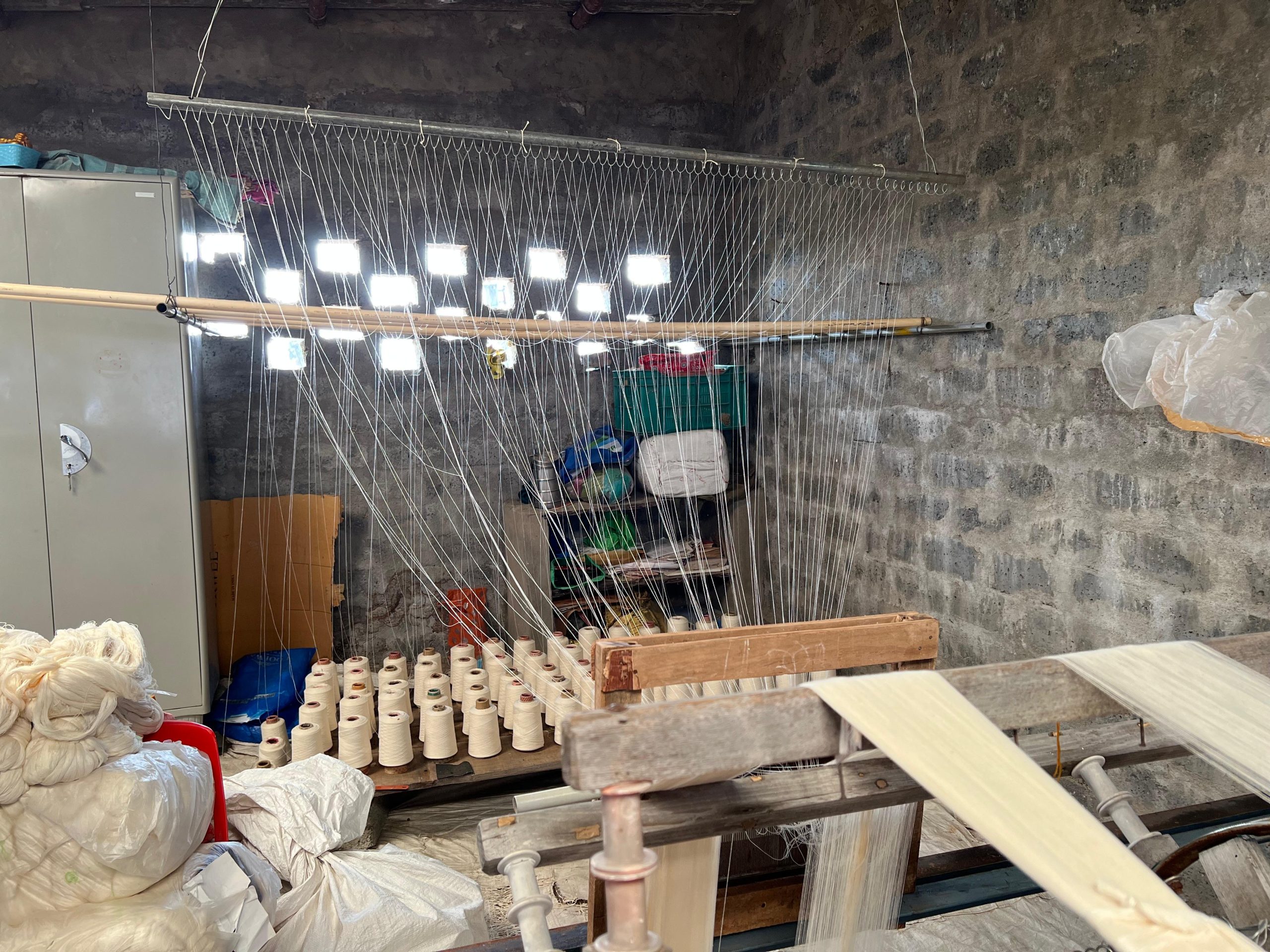
During the eighteenth century, the kings of Asaf Jahi dynasty promulgated acts that attracted textile craftsmen from the central and western regions of India to the Andhra region. Naturally, it resulted in an osmosis of ideas and techniques. It was said that the Zamindars and the royal families of Andhra had weavers that would work only for the clan. This arrangement ensured the motifs remained confidential and exclusive. Back in the day, Venkatagiri sarees were unbleached, strikingly resembling kasavu sarees of Kerala. Ever since, the handspun fabric Venkatagiri has always been cherished by the upper stanza of the society. Over the years, Venkatagiri’s fine cotton muslin jamdanis were exported to Bengal and Chanderi. The trade lasted till the end of the nineteenth century. In the subsequent fifty years, however, the quality of the muslins from regions of Bengal and Chanderi has continued to decline, leaving ripples that lasted longer than usual. The then weavers wove sarees with a 200 thread count, their present-day successors, using drawboy dobbies, manage a count anywhere between 120 and 200 on the body and 80 on the border. This heavy count on the border makes the sarees stiff at the bottom and hence, fall need not be used In the recent years, artificers of Venkatagiri started to push the envelope by weaving extra weft to the body and pallu of the saree. This was done in response to the competition from the clusters such as Uppada that used jamdani technique on fine cottons. Sadly, of late, the pristine Venkatagiri saree is cannibalised by the cheap, mass-produced powerloom sarees. Today, only a handful of sarees are richly brocaded with motifs in gold. Other regular sarees sport a plain body with pure kaddi zari border. Nevertheless, due to the extensive craftsmanship involved, a typical cotton saree from the house of Venkatagiri costs as much as — if not higher than — their silk counterparts. Thus making Venkatagiri the finest among the plain cotton textures the world over.
Number of weavers to weave a saree: one or two depending on the complexity
Number of days to weave a saree: 3-90 days depending on the complexity
Technique: jamdani
Specialty: very fine cotton with pure gold zari
Field/ Body: Plain , occasional buttas
Border: kaddi zari border
Motifs: paisley, flowers, circles
| Number of weavers to weave a saree | one or two depending on the complexity |
| Number of days to weave a saree | 3-90 days depending on the complexity |
| Technique | jamdani |
| Specialty | very fine cotton with pure gold zari |
| Field/ Body | Plain , occasional buttas |
| Border | kaddi zari border |
| Motifs | paisley, flowers, circles |